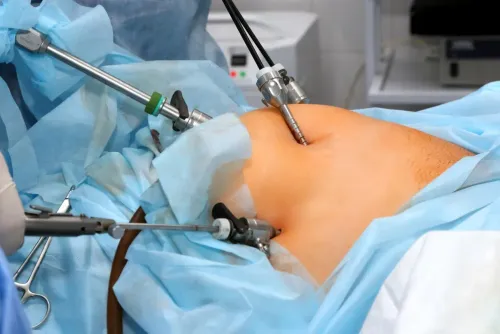


When surgery is required for gynaecological cancer, many patients understandably want to know whether a minimally invasive procedure is possible. Smaller incisions and potentially faster recovery can be appealing, but cancer treatment involves considerations that go well beyond postoperative comfort.
Selecting a Minimally Invasive Gynecologic Oncologist requires attention to cancer-specific decision-making, appropriate surgical selection and the ability to choose a different approach when minimally invasive surgery is not suitable.
Cancer Expertise Should Come Before Surgical Technique
A surgeon should first determine what operation the cancer requires.
Only then should the most appropriate route be selected.
The assessment generally considers:
Cancer type
Stage
Histopathology
Imaging findings
Tumour characteristics
Previous treatment
General health
Relevant surgical history
A recommendation for laparoscopy or robotic surgery should follow this evaluation rather than precede it.
Ask What “Minimally Invasive” Means in Your Case
Minimally invasive surgery can include conventional laparoscopy or robotic-assisted surgery.
Both use small incisions, but they involve different instrumentation.
Patients should understand exactly which procedure is proposed and why it is suitable for their condition.
Look for Appropriate Patient Selection
Not every gynaecological cancer should be approached in the same way.
The surgeon should be willing to explain circumstances in which minimally invasive surgery may not be advisable.
This is an important readiness indicator because responsible surgical care involves selecting the right approach rather than applying one technique to every patient.
Understand How Staging Will Be Addressed
Depending on the cancer, surgery may involve more than removal of the primary organ.
Accurate staging may require assessment or sampling of other tissues or lymph nodes according to the individual diagnosis and accepted treatment principles.
Ask how staging will be performed and how the findings could influence further treatment.
Ask About Unexpected Findings
Imaging provides valuable information, but surgery can occasionally reveal findings that were not apparent beforehand.
Before an operation, patients should understand what might happen if more extensive disease is discovered.
Possible changes could include additional procedures, modification of the surgical route or a different postoperative treatment strategy.
Evaluate the Quality of Counselling
A useful consultation should answer practical questions such as:
What cancer do I have?
What stage is suspected?
What operation do I need?
Why is minimally invasive surgery appropriate?
What are the alternatives?
What are the relevant risks?
How long might I remain in hospital?
Will additional cancer treatment be needed?
How will follow-up be arranged?
A patient should leave with a clearer understanding of the plan rather than simply a surgery date.
Consider the Entire Treatment Pathway
Cancer treatment does not end when surgery is completed.
Final pathology may influence whether chemotherapy, radiotherapy, surveillance or another treatment is recommended.
Coordination with other oncology specialists therefore remains important.
Dr. Kunaal Shinde provides advanced gynaecological surgical assessment in Pune, Maharashtra, including evaluation for minimally invasive approaches in appropriately selected cancer cases.
The strongest reason to choose a minimally invasive cancer surgeon is not access to a particular technology. It is the combination of appropriate oncological assessment, advanced surgical capability and the judgment to recommend minimally invasive surgery only when it fits the patient's disease.