
Complex endometriosis is defined by where disease has spread and which organs it affects, not by pain severity alone. You will learn how to recognise disease that needs specialist assessment, interpret the tests used for surgical mapping, compare treatment options and evaluate a surgeon or multidisciplinary team in Pune.
Key takeaways
- Seek specialist assessment for bowel, bladder, ureteric or deep pelvic symptoms.
- Ask whether MRI maps bowel, bladder, ureters, ovaries and posterior pelvic disease.
- Confirm which surgeons and specialists will manage complex disease during laparoscopy.
- Compare surgery with hormonal treatment, fertility goals and your personal risk tolerance.
What makes endometriosis complex, and when should you seek specialist assessment?
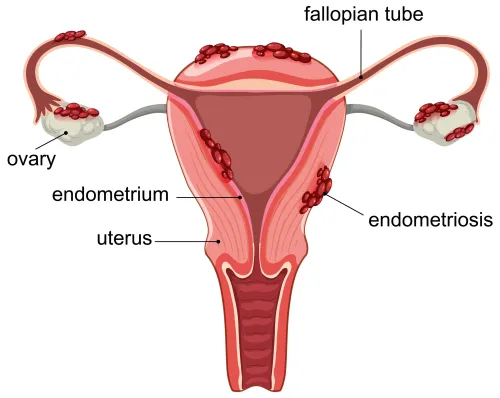
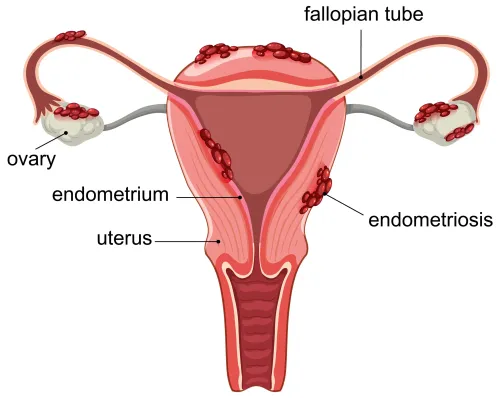
Superficial endometriosis lies on the peritoneal surface and may cause severe pain despite small visible lesions. Ovarian endometriosis forms an endometrioma, a blood-filled cyst that can reduce ovarian reserve or make surgery technically difficult. Deep endometriosis extends into tissue beneath the surface and can involve the bowel, bladder, ureters, pelvic nerves or posterior pelvic compartment.
| Type | Typical location | Why it changes assessment |
|---|---|---|
| Superficial | Pelvic lining or peritoneum | Imaging can miss it; diagnosis may require laparoscopy |
| Ovarian | Ovary, forming an endometrioma | Surgery must balance cyst removal against preserving ovarian tissue |
| Deep | Bowel, bladder, ureter, ligaments or pelvic nerves | Planning may require colorectal, urology, fertility and pain specialists |
Disease becomes complex when deep lesions, endometriomas, dense adhesions or more than one pelvic compartment are involved. A deep lesion near the ureter can threaten drainage even without obvious urinary symptoms.
Seek specialist assessment for period pain that stops normal activities, pain during sex, painful bowel movements, cyclical rectal bleeding, urinary pain or blood in the urine, persistent pelvic pain, infertility, or pain that returns after treatment.
Symptoms from different systems are especially important: painful periods plus bowel pain, urinary symptoms, deep sexual pain or difficulty conceiving suggests disease beyond one compartment.
If you are searching for an endometriosis expert Pune complex laparoscopic surgery, ask whether the team maps organ involvement before operating and manages these conditions routinely. A deep endometriosis surgeon Pune patients consult should explain when hormonal treatment, pain care or observation is safer than surgery.
Which scans map bowel, bladder, ureteric and ovarian disease before surgery?
An endometriosis-focused transvaginal ultrasound and pelvic MRI can map deep disease before surgery, but a normal result does not exclude superficial peritoneal implants. The images should guide team planning and consent, not replace operative assessment.
| Scan | What it can show | What it can miss or limit |
|---|---|---|
| Endometriosis-focused transvaginal ultrasound | Endometriomas, bowel nodules, bladder lesions, reduced organ sliding, adhesions and some ureteric involvement | Superficial implants, disease high in the bowel, small lesions and disease hidden by pain, bowel gas or limited access |
| Pelvic MRI | Deep lesions across pelvic compartments, bowel-wall depth, bladder disease, ovarian endometriomas, adhesions and pelvic anatomy | Small superficial deposits, subtle lesions and occasionally the full extent of adhesions |
For advanced endometriosis laparoscopy Pune patients, the report should answer practical questions rather than simply label disease as “present.”
- A bowel nodule or rectosigmoid lesion should prompt discussion of colorectal support and possible shaving, disc excision or segmental resection.
- Bladder disease requires planning for cystoscopy or bladder repair; suspected ureteric disease requires urology input, renal imaging and kidney-function testing because obstruction can silently damage a kidney.
- An endometrioma requires an ovarian-reserve and fertility discussion before surgery, since cyst removal can reduce healthy ovarian tissue.
- If symptoms strongly suggest endometriosis despite negative scans, ask whether superficial disease remains likely and how diagnostic laparoscopy would change management.
What happens during complex laparoscopic endometriosis surgery?
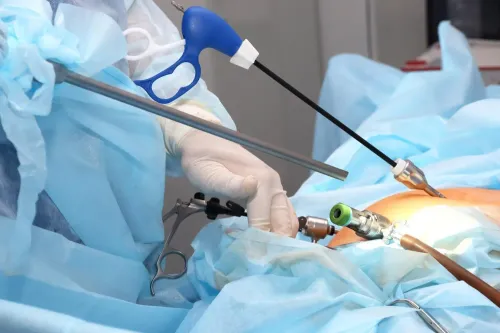
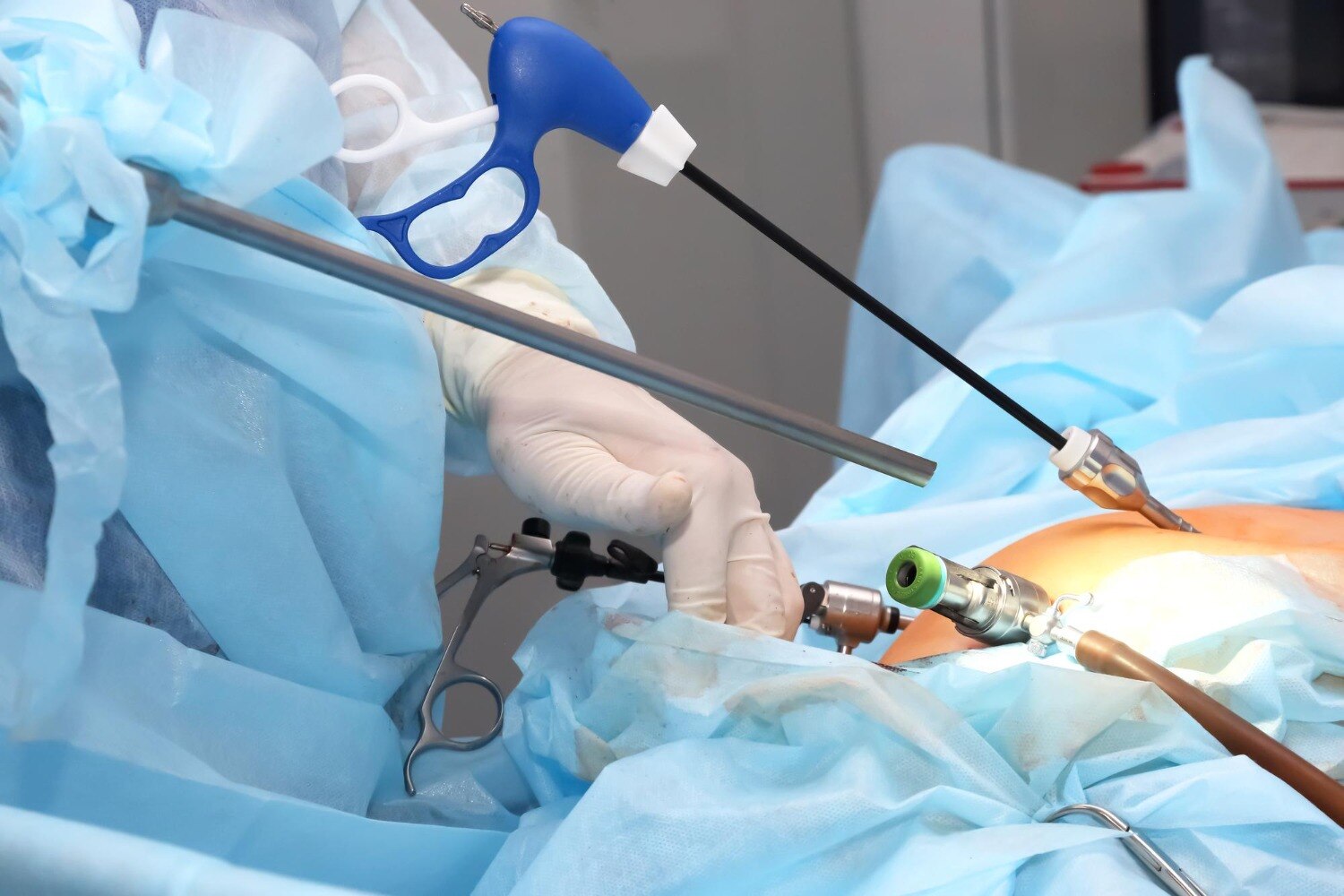
The operation begins under general anaesthesia with small ports placed through the abdomen. The camera port usually goes near the navel; working ports are positioned according to the mapped disease, previous scars and the instruments required.
Extensive disease can require an additional port, and rarely conversion to open surgery if bleeding or organ injury makes laparoscopy unsafe.
The surgeon performs adhesiolysis by separating bowel, ovaries, uterus, bladder and pelvic sidewalls that have become stuck together. This exposes the anatomy before treating visible disease. Superficial lesions may be ablated, while deep lesions are usually excised to remove tissue beneath the surface.
The choice affects pain relief, bleeding and the risk of damage to nearby organs.
An endometrioma is often opened, drained and treated by removing its cyst wall, but ovarian tissue can be lost during cyst surgery. Ask how the plan protects ovarian reserve, especially if pregnancy is a goal.
If disease reaches another organ, the operation may include:
- Bowel shaving, disc excision or segmental resection, selected by lesion depth, size, location, circumference and narrowing. More extensive resection is not automatically better.
- Bladder lesion excision or partial bladder-wall repair when the muscle is involved.
- Ureterolysis, ureteric repair or reimplantation when disease encases or narrows a ureter.
Before choosing complex endometriosis surgery Pune services or an endometriosis operation Pune provider, ask who performs these procedures and how complications are managed. Discuss bleeding, infection, fistula, clotting, altered bowel or bladder function and ovarian-reserve loss for your actual plan.
When is surgery worth the risk, and when is another treatment better first?
Surgery earns its risk when pain remains disabling, organs are threatened, or anatomy prevents a fertility goal after other options have failed. Deep disease affecting the bowel, bladder, ureters or pelvic nerves requires a risk discussion based on the organs involved, not a promise that laparoscopy is minor surgery.
- Choose hormonal suppression first when pregnancy is not an immediate goal and symptoms respond to a combined hormonal contraceptive or progestogen. Treatment must account for contraindications, side effects and your preferred contraceptive plan.
- Choose pain care when pain persists despite hormonal treatment, or when pelvic-floor muscle spasm, nerve sensitisation or bowel symptoms need separate treatment. Analgesia, pelvic-floor physiotherapy and pain medicine can work alongside observation.
- Choose observation when symptoms are manageable, scans show no organ threat and you accept scheduled review. Seek reassessment if pain escalates, urinary or bowel symptoms become cyclical, or fertility plans change.
- Discuss assisted reproduction when infertility is the priority, particularly if ovarian surgery could reduce egg supply. IVF may reach pregnancy sooner than surgery, but blocked anatomy, severe pain or deep disease can change that balance.
- Discuss surgery when previous medical treatment failed, pain limits work or sex, an endometrioma is causing concern, or disease obstructs an organ. Ask whether the aim is pain relief, fertility, organ protection or diagnosis.
Before ovarian surgery, review AMH, antral follicle count, cyst history and pregnancy timeline. Bilateral, recurrent or repeat endometrioma operations carry greater ovarian-reserve risk. An endometriosis expert in Pune should explain these trade-offs before recommending complex laparoscopic surgery.
How do you compare a complex endometriosis team in Pune?
Ask for named specialists, recent case numbers and audited outcomes—not simply a promise of advanced laparoscopy. A safe complex endometriosis surgery Pune team should explain who handles each organ, where you would be admitted, and how complications are treated after discharge.
| Question | Evidence to request | Warning sign |
|---|---|---|
| How many bowel cases are performed each year? | Numbers for shaving, disc excision and segmental resection; a named colorectal surgeon; conversion and leak rates | Bowel resection is offered without colorectal input or technique-specific discussion |
| Who manages bladder and ureteric disease? | A named urologist, ureteric stent policy, and documented urinary-injury and fistula rates | The surgeon cannot explain ureteric obstruction or postoperative drainage |
| How will fertility be protected? | Review of ovarian reserve, endometrioma size, prior surgery, AMH or antral follicle count, and an IVF referral pathway | The team promises improved fertility without discussing reduced ovarian reserve |
| How are failures handled? | Written plans for bleeding, infection, bowel or bladder injury, venous thromboembolism, conversion and readmission | No complication audit or emergency contact process |
Use a consultation with Dr.Kunaal Shinde- Gynaec Laparoscopic Surgeon Pune to request these specifics and compare them with another deep endometriosis surgeon Pune. Ask whether advanced endometriosis laparoscopy Pune means conventional laparoscopy or robotic assistance; the platform does not prove better pain or fertility outcomes.
Choose the team, not the label, for an endometriosis operation Pune.
Related services
Laparoscopy Surgery Diagnostic Hystero Laparoscopy Lap Surgery for Endometrisis Lap Surgery for Ectopic Pregnancy Lap Surgery for uterine Anomalies Lap Cerclage... View service → |
Gynaec Laparoscopic Surgery Gynecologic laparoscopic surgery is a minimally invasive procedure that allows a surgeon to diagnose and treat gynecological conditions. View service → |
Frequently asked questions
What makes endometriosis complex, and when should you seek specialist assessment?
Deep endometriosis involving the bowel, bladder, ureters, pelvic nerves or posterior pelvic compartment requires specialist assessment. Seek review for persistent pelvic pain, painful bowel movements, painful urination, infertility, an endometrioma or symptoms that continue despite treatment.
Which scans map bowel, bladder, ureteric and ovarian disease before surgery?
A specialist pelvic ultrasound can assess endometriomas and signs of deep disease. Pelvic MRI helps map bowel, bladder, ureters and posterior pelvic compartments before complex surgery. Ask how the imaging findings will change the surgical plan.
What happens during complex laparoscopic endometriosis surgery?
The team examines the pelvis through small abdominal incisions, removes or treats endometriosis and protects nearby organs. Bowel, bladder or ureteric disease may require coordinated input from colorectal or urology specialists.
When is surgery worth the risk, and when is another treatment better first?
Surgery requires a balance between pain, organ involvement, fertility plans, ovarian reserve and operative risks. Hormonal treatment or observation may be better first when symptoms respond and there is no urgent organ obstruction or concerning finding.
How do you compare a complex endometriosis team in Pune?
Ask about experience with deep disease, bowel, bladder, ureteric and ovarian surgery; preoperative MRI planning; fertility preservation; complication management; and access to colorectal and urology support.