
An ovarian mass needs a structured cancer assessment before anyone decides between laparoscopy and an open operation. You will learn how imaging, CA-125, pathology, disease extent and fertility goals shape that decision, and how to evaluate a surgeon who treats both endometriosis and suspected ovarian cancer.
Key takeaways
- Ultrasound, CA-125 and examination guide risk assessment; no single test confirms ovarian cancer.
- Choose laparoscopy only when imaging and surgical planning support safe, complete treatment.
- Staging surgery can include removal of ovaries, uterus, omentum, lymph nodes and visible tumour.
- Ask who will perform staging, how specimens reach pathology and what happens if cancer is found.
How doctors investigate an ovarian mass before surgery
An ovarian mass is assessed by combining symptoms, examination, imaging, blood tests and, when needed, pathology. Pelvic pain, bloating and an adnexal mass occur with endometriosis, benign cysts and ovarian cancer, so symptoms alone cannot distinguish them. Pelvic examination checks tenderness, mobility, size and other pelvic abnormalities.
1. Transvaginal ultrasound looks for features of a benign-appearing cyst, an endometrioma or possible cancer, including solid areas, papillary projections, thick septations, bilateral disease, blood flow and ascites. Age, menopausal status and family history change the level of concern.
2. CA-125 supports risk assessment; it does not diagnose cancer by itself. Endometriosis, menstruation, fibroids and pelvic infection can raise it, while a normal result does not exclude cancer. If ultrasound and CA-125 raise concern, CT of the abdomen and pelvis assesses spread. MRI can clarify anatomy or tissue characteristics when ultrasound findings remain uncertain.
3. Tissue diagnosis is required when imaging cannot safely establish the diagnosis or cancer treatment depends on histology. Tissue may come from an image-guided biopsy, biopsy during diagnostic laparoscopy or examination of the surgical specimen.
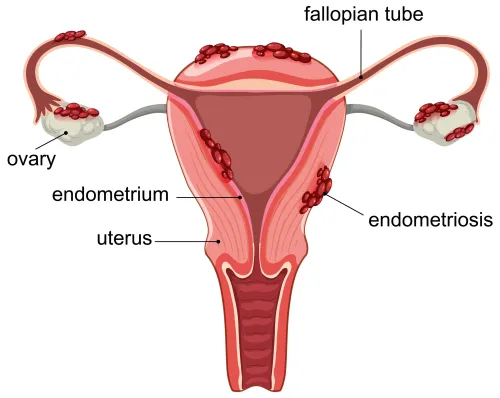
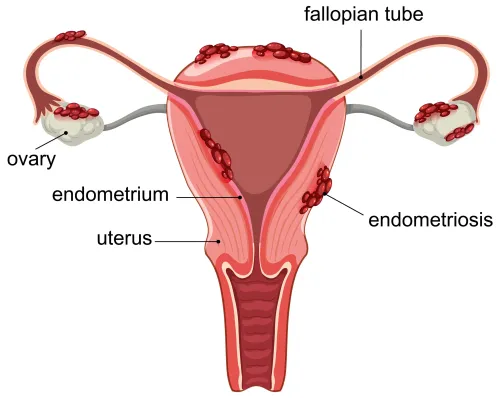
An endometrioma can resemble malignancy on imaging. An endometriosis diagnosis neither confirms nor rules out ovarian cancer, so an endometriosis expert Pune search should lead to risk assessment, not an assumption that every complex cyst is benign. Anyone searching ovarian cancer laparoscopy Pune should expect pathology and multidisciplinary review.
When laparoscopy is appropriate—and when an open operation is safer
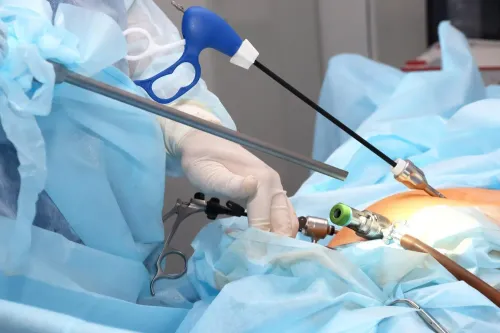
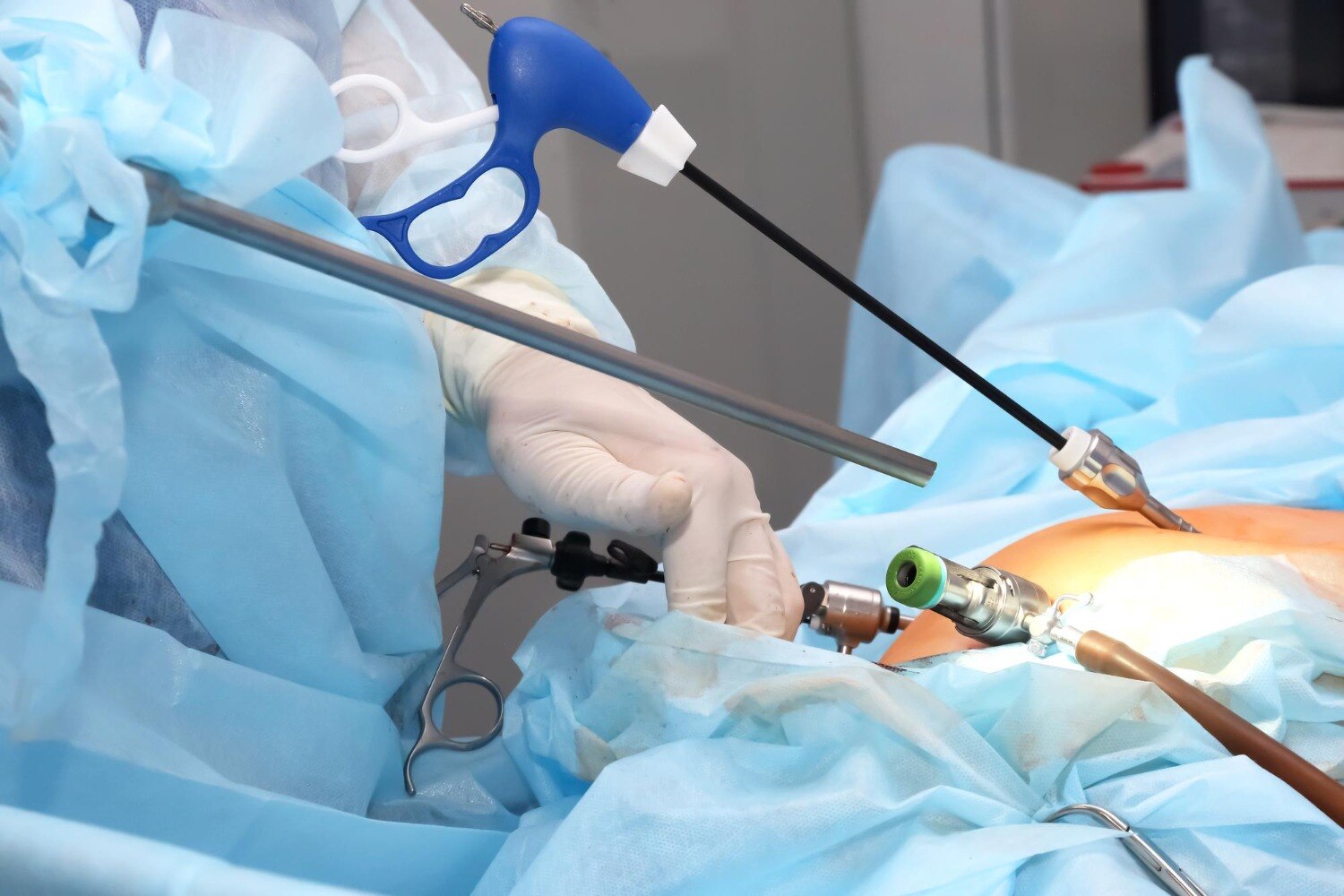
Laparoscopy is appropriate when it can answer a diagnostic question or achieve safe, complete treatment without compromising cancer control. It is not automatically the best definitive operation for suspected advanced ovarian cancer.
1. Diagnostic laparoscopy inspects the peritoneal cavity, collects peritoneal washings and biopsies suspicious areas. It can show whether complete cytoreduction is feasible when scans do not provide enough information.
2. Laparoscopic removal of a selected ovarian mass suits a patient whose mass appears removable without rupture or spillage and whose cancer risk and staging needs have been assessed.
3. Comprehensive staging surgery may be performed laparoscopically in carefully selected early-stage cases. It can include washings, biopsies, omentectomy, lymph-node assessment and removal of visible disease, with specimen containment.
4. Laparoscopic assessment before chemotherapy can help determine whether primary surgery is realistic. If disease is extensive, neoadjuvant platinum-based chemotherapy followed by interval debulking surgery may be chosen after imaging, clinical assessment and multidisciplinary review.
A large or highly suspicious mass, rupture risk, extensive peritoneal deposits, bowel involvement, upper-abdominal disease or the need to remove all visible tumour can favour planned laparotomy. In advanced epithelial ovarian cancer, complete cytoreduction matters more than the smallest incision.
Laparoscopic ovarian cancer surgery can mean smaller incisions and faster short-term recovery, but it has no established survival advantage over equivalent open staging or cytoreduction. Conversion to laparotomy protects safe removal and cancer control when keyhole access cannot achieve both. An ovarian cancer laparoscopy Pune search should therefore focus on staging capability, not incision size.
What ovarian-cancer staging surgery can include
Staging surgery is designed to establish how far ovarian cancer has spread and remove disease safely; it is not routine endometriosis surgery. The tumour’s histology, apparent stage and your fertility plan determine the operation.
| Procedure | What it can include | When it applies |
|---|---|---|
| Unilateral salpingo-oophorectomy | Removal of the affected ovary and fallopian tube, with staging samples | Selected disease when preserving the uterus and opposite ovary is appropriate |
| Comprehensive staging | Hysterectomy, removal of both tubes and ovaries, omentectomy, washings, biopsies and lymph-node assessment | When fertility preservation is not appropriate or wider staging is required |
| Fertility-sparing surgery | Removal of the affected ovary and tube while preserving the uterus and opposite ovary | Carefully selected limited-stage, favourable-histology cancers |
Staging may also require removal of visible peritoneal disease. The surgeon should explain whether bowel, ureter, bladder or upper-abdominal involvement would change the incision or require another specialist.
- Peritoneal washings collected before tumour manipulation
- Biopsies of suspicious peritoneal, pelvic or upper-abdominal areas
- Assessment or removal of retroperitoneal lymph nodes when indicated
- Retrieval-bag removal of a suspicious mass to reduce rupture and spillage
- Conversion to an open incision if keyhole removal cannot protect cancer control
Fertility-sparing surgery still requires proper staging and an oncology-led recurrence discussion. Before elective endometrioma surgery, ask about ovarian reserve, AMH testing, repeat-surgery risks and oocyte or embryo preservation.
A gynaecologic-oncology pathologist determines histology, grade and postoperative stage. Newly diagnosed epithelial ovarian cancer warrants germline testing, including BRCA1 and BRCA2, because results can affect treatment and relatives. If you search for laparoscopic ovarian cancer surgery or gynecologic cancer surgery Pune, confirm that these pathology, genetics and oncology arrangements are included.
How to assess a surgeon who treats endometriosis and ovarian cancer
Judge the surgeon by documented ovarian-cancer work, not by the label “laparoscopic surgeon ovarian cancer endometriosis expert Pune.” Ask for the number of ovarian-cancer staging and cytoreduction procedures performed each year, whether the figure is audited, and how often laparoscopy is converted to open surgery.
Conversion can protect complete tumour removal when keyhole access is unsafe or incomplete.
| Question | Evidence to seek | Warning sign |
|---|---|---|
| Case experience | Endometriomas, suspicious adnexal masses, bowel or upper-abdominal disease, and fertility-sparing cases | The discussion covers only routine endometriosis |
| Cancer team | A tumour board with gynaecologic oncology, radiology, medical oncology, pathology, and bowel or urinary-tract surgeons | Oncology decisions are made by one surgeon alone |
| Specimen and genetics | Retrieval-bag or open-removal planning, gynaecologic-oncology pathology, scan interpretation, genetic counselling, and BRCA1 and BRCA2 testing | No clear plan for spillage, pathology, or inherited-risk assessment |
Ask these questions directly:
- Who reviews my ultrasound, CT or MRI, and will the case go to a multidisciplinary tumour board?
- How will you handle bowel, ureteric, bladder or upper-abdominal involvement?
- What happens if the mass cannot be removed intact through laparoscopic access?
- Who examines the specimen, and how will histology, stage and residual disease guide treatment?
- If fertility preservation is considered, what stage and tumour type make it safe?
For patients comparing gynecologic cancer surgery Pune options, Dr.Kunaal Shinde- Gynaec Laparoscopic Surgeon Pune should be assessed against this pathway, not incision size alone. A clinic should answer each point before consent.
Related services
Gynaec Laparoscopic Surgery Gynecologic laparoscopic surgery is a minimally invasive procedure that allows a surgeon to diagnose and treat gynecological conditions. View service → |
Gynaec Onco Surgery Cervical Cancer Ovarian Cancer Uterine Cancer Fallopian Tube Cancer Vulvar Cancer View service → |
Questions to settle before consenting to surgery
Consent should follow a clear plan, not just a promise of smaller incisions. Ask what your ultrasound, CA-125, CT or MRI show, whether you need tissue diagnosis before treatment, and whether the proposed operation is diagnostic laparoscopy, mass removal, full staging or assessment before chemotherapy.
| Option | What it means | When it applies |
|---|---|---|
| Diagnostic laparoscopy | Inspection, washings and targeted biopsies | When disease extent or tissue diagnosis remains uncertain |
| Mass removal | Removal of a selected ovarian mass with specimen protection | When imaging suggests a removable, limited lesion |
| Full staging | Cancer-directed surgery, which may include hysterectomy, both tubes and ovaries, omentectomy, lymph nodes, washings and visible peritoneal disease | When cancer is confirmed or strongly suspected |
| Assessment before chemotherapy | Operative evaluation of whether complete cytoreduction is feasible | When advanced disease may require neoadjuvant platinum-based chemotherapy |
Ask these questions before signing consent:
- What findings would make you choose an open operation, and what is your audited conversion-to-open rate or relevant case volume?
- How will you prevent rupture and spillage? Who will manage bowel, bladder, ureter or upper-abdominal involvement?
- How will fertility preservation, AMH, menopause, genetic testing and chemotherapy timing change the plan?
- Will a multidisciplinary tumour board review my case?
- Will pathology identify histology, grade, stage and residual disease?
These answers help you compare ovarian cancer laparoscopy Pune and gynecologic cancer surgery Pune services by cancer-control capability. An endometriosis expert Pune service must also explain why endometrioma surgery and cancer surgery differ in goals, consent, specimen handling and follow-up.
Frequently asked questions
How do doctors investigate an ovarian mass before surgery?
They combine symptoms, pelvic examination, transvaginal ultrasound and blood tests such as CA-125. CT or MRI can map disease, while pathology confirms the diagnosis when tissue is obtained.
When is laparoscopy appropriate for suspected ovarian cancer?
Laparoscopy suits selected masses when imaging suggests that minimally invasive surgery can remove the mass safely and preserve cancer-staging quality. Extensive disease, a large mass or a need for wider access can make open surgery safer.
What can ovarian-cancer staging surgery include?
Depending on findings, staging can include removal of the ovaries and fallopian tubes, uterus, omentum, pelvic or para-aortic lymph nodes, and visible tumour, followed by laboratory pathology.
How should you assess a surgeon treating endometriosis and ovarian cancer?
Ask about specific experience in laparoscopic ovarian cancer surgery, formal gynecologic oncology training, conversion-to-open planning, pathology review and access to multidisciplinary cancer care.
What should you ask before consenting to ovarian cancer surgery?
Ask about the suspected diagnosis, planned procedure, fertility implications, possibility of open surgery, organs that might be removed, complications, recovery, pathology timing and treatment after surgery.