
Severe period pain, pain during sex, bowel or bladder pain during menstruation, infertility, or an ovarian endometrioma can indicate endometriosis, but symptoms and disease extent do not always match. By understanding how specialists investigate disease, compare treatment options, plan surgery and manage follow-up, you can ask more useful questions before choosing care.
Key takeaways
- Normal scans do not rule out endometriosis or explain away severe symptoms.
- Choose treatment based on pain, fertility plans, organ involvement and daily impact.
- Ask how surgery will protect the bowel, bladder, ureters, ovaries and fertility.
- Confirm the surgeon’s endometriosis experience and your follow-up plan before operating.
How endometriosis is identified when symptoms and scans do not match
Severe period pain, pain during sex, bowel or bladder pain during menstruation, chronic pelvic pain, infertility, or an ovarian endometrioma can indicate endometriosis even when an examination or scan appears normal. Symptoms and disease extent do not reliably match: extensive lesions can cause little pain, while severe pain can arise from limited visible disease.
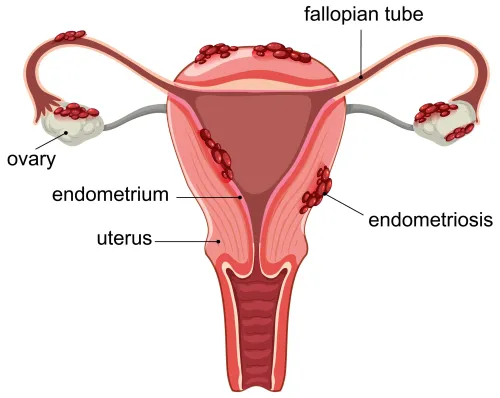
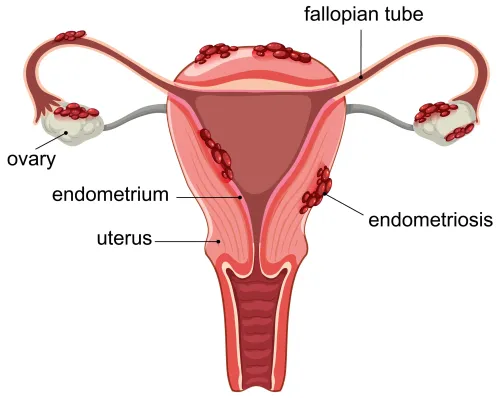
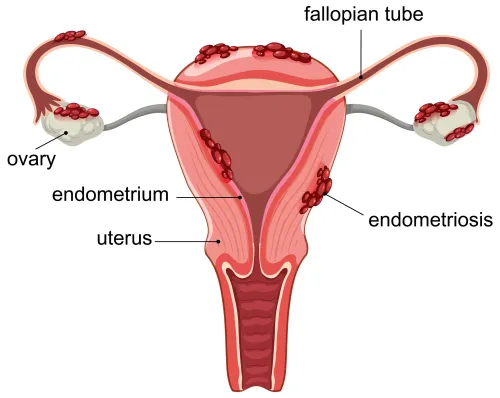
Endometriosis means endometrial-like tissue outside the uterus. Superficial peritoneal disease lies on the pelvic lining, an endometrioma forms an ovarian cyst filled with old blood, and deep infiltrating endometriosis extends into tissues such as the bowel, bladder or ureter. A normal pelvic examination or transvaginal ultrasound does not exclude superficial disease.
| Assessment | What it can show | What it cannot settle |
|---|---|---|
| Transvaginal ultrasound | Endometrioma, ovarian adhesions, and signs of deep disease | Small or superficial peritoneal lesions |
| Pelvic MRI | Deep bowel, bladder, ureteric disease and disease mapping before surgery | Every microscopic or superficial implant |
| Diagnostic laparoscopy | Direct view of pelvic lesions and adhesions; allows excision or biopsy | Pain from adenomyosis, nerve sensitisation or pelvic-floor dysfunction by itself |
| Histopathology | Tissue confirmation after biopsy or excision | Whether treatment will eliminate every symptom |
A clinician does not automatically need laparoscopy before starting treatment. If symptoms, examination and imaging disagree, ask an endometriosis expert Pune patients can verify by specialist training, relevant operative experience, histopathology practice and access to bowel, bladder, ureteric and fertility support.
How a specialist builds a treatment plan around pain, fertility and daily life
Pain severity alone does not decide treatment. A specialist considers where pain occurs, how it affects sleep, work, sex and bowel or bladder function, and whether symptoms respond to medication. The plan also weighs ovarian reserve, pregnancy timing, previous procedures and the findings on ultrasound or MRI.
- Match treatment to your priority: pain control, trying to conceive, protecting ovarian tissue or maintaining daily function.
- Review medical options, including hormonal suppression when appropriate, pain medicines and pelvic-floor or pain-team support.
- Discuss fertility before treating an ovarian endometrioma, because surgery can reduce ovarian reserve, especially after repeat or bilateral operations.
- Map deep disease involving the bowel, ureter or bladder and name the specialist responsible for each organ if surgery becomes necessary.
- Compare continued medical treatment, observation, fertility treatment and surgery, including recovery time, possible complications and recurrence follow-up.
Minimally invasive endometriosis care means more than small incisions. It includes shared decision-making and a plan for monitoring symptoms when surgery is not the best next step.
A robotic laparoscopic gynec surgeon should explain that the robot provides wristed instruments and three-dimensional vision but does not make decisions independently or guarantee better pain, fertility or recurrence outcomes than conventional laparoscopy. Before choosing a surgeon, verify medical registration, specialist training, endometriosis experience and access to colorectal, urological, fertility and pain support.
When endometriosis surgery is appropriate—and what the operation must protect
Surgery becomes reasonable when pain remains disabling despite appropriate medical treatment, an endometrioma threatens ovarian tissue or follicle access, deep disease affects an organ, or infertility planning requires removal of disease after a fertility discussion. A scan finding alone does not make surgery necessary; compare expected benefit with adhesions, ovarian reserve loss, complications and recurrence.
| Disease pattern | What the operation must protect |
|---|---|
| Superficial peritoneal lesions | Remove visible implants while limiting unnecessary tissue injury; confirm whether the proposed procedure is diagnostic or excisional. |
| Ovarian endometrioma | Balance cyst removal against healthy ovarian tissue. Bilateral or repeat surgery can reduce ovarian reserve, so discuss egg-freezing or other fertility options before operating. |
| Deep infiltrating disease | Map involvement of the bowel, ureter or bladder and decide whether colorectal or urological support is needed. Do not treat deep-organ surgery as a routine gynaecological procedure. |
Ask whether imaging has mapped the disease, whether excised tissue will undergo histopathology, and who will manage each involved organ. Confirm the surgeon’s plan if disease is more extensive than expected, including conversion and complication policies and access to fertility, pain, colorectal and urological specialists.
A search for robotic endometriosis surgery Pune should also prompt questions about registration, specialist training and endometriosis experience. The robot is a technical approach, not proof that surgery will improve pain, fertility or recurrence outcomes.
What robotic-assisted laparoscopy changes in a technically difficult operation
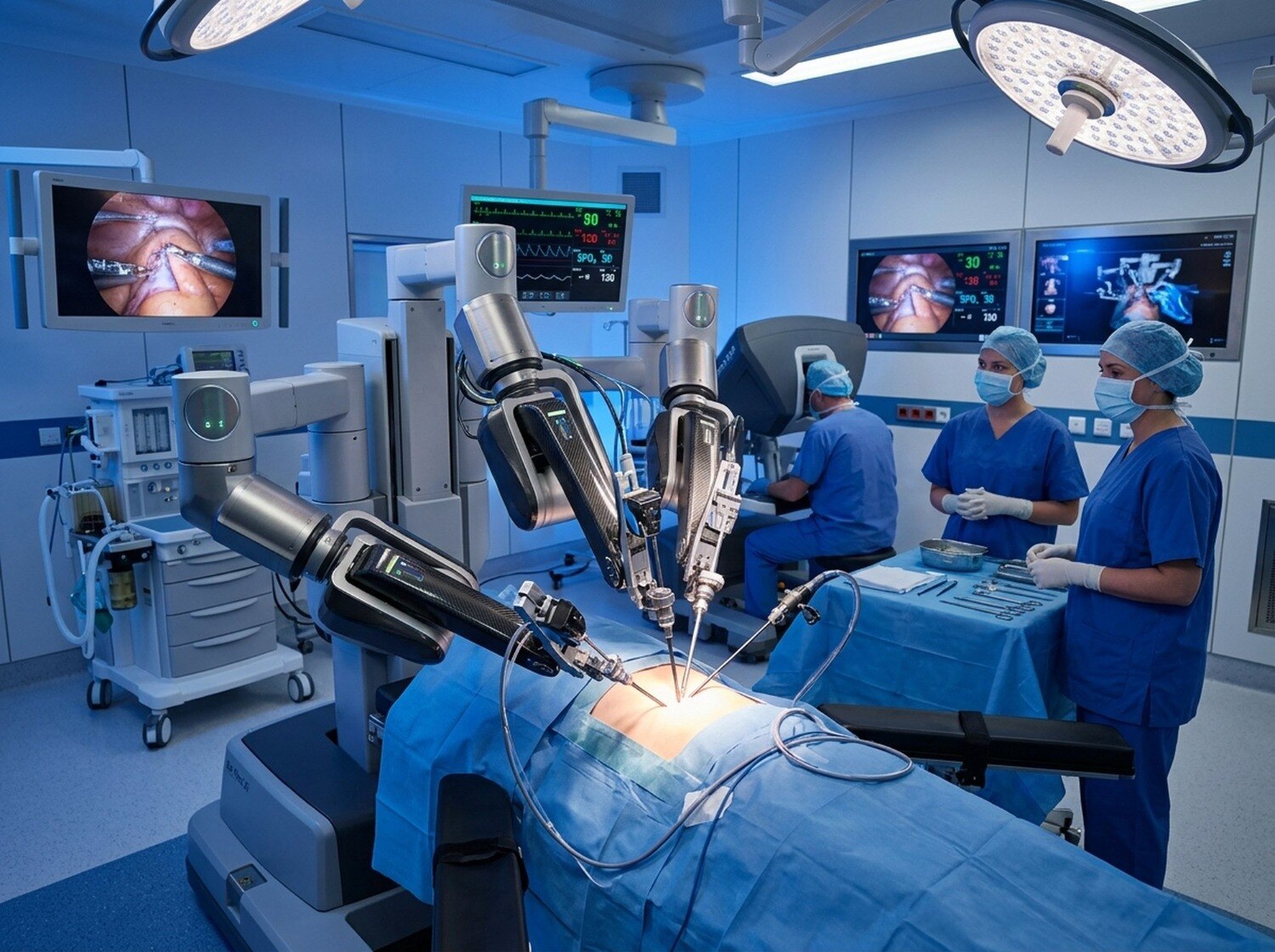
Robotic-assisted laparoscopy changes how difficult pelvic tissue is handled, not what endometriosis is. The surgeon controls every movement; the robot does not operate independently.
Wristed instruments, three-dimensional magnified vision and improved ergonomics can help with scarred tissue around the bowel, ureters, bladder or ovary, but they do not guarantee better pain relief, fertility or recurrence outcomes.
| Conventional laparoscopy | Robotic-assisted laparoscopy |
|---|---|
| Straight instruments with a fixed range of motion | Wristed instruments that bend inside the pelvis |
| Two-dimensional or enhanced camera view | Three-dimensional magnified view |
| Surgeon operates while standing | Surgeon operates from a console with ergonomic support |
| Usually shorter setup and operating time | May require longer setup, greater resources and trained staff |
| Effective for many procedures | Useful when precise dissection makes technical control difficult |
The care pathway around the operation includes:
- Before surgery, review ultrasound or MRI findings, fertility plans, ovarian reserve concerns and the proposed procedure: diagnostic, excisional, endometrioma or deep-organ surgery. Ask whether histopathology will be collected and which colorectal or urological specialists will attend if bowel, ureter or bladder disease is suspected.
- During surgery, the surgeon maps disease, removes or biopsies visible lesions and protects ovarian tissue and organ function. Ovarian surgery can reduce ovarian reserve, especially after bilateral or repeat procedures.
- Immediately afterward, expect monitoring for bleeding, urine output, bowel function and pain control. Ask about conversion to open surgery, warning signs, pathology results and the follow-up date.
A search phrase such as “robotic laparoscopic gynec surgeon Pune” is not a qualification. Verify medical registration, advanced training, endometriosis experience and hospital support for complex complications.
How to evaluate a surgeon and plan follow-up after endometriosis treatment
Verify the surgeon’s medical registration, specialist training and documented experience with your disease pattern before choosing. Ask how many cases involve superficial disease, endometriomas, deep bowel or ureteric disease, and whether the hospital can manage bowel, bladder, ureteric and fertility-related complications. “Endometriosis expert Pune” is a search label, not a regulated qualification.
Before agreeing to robotic endometriosis surgery Pune, ask:
- Is the operation diagnostic, excisional, endometrioma-related or deep-organ surgery?
- What do my ultrasound or MRI findings show, and which organs might be involved?
- Will removed tissue go for histopathology?
- What is the plan if disease is more extensive than expected, including conversion and complications?
- How will ovarian tissue, ovarian reserve and future pregnancy plans influence the procedure?
| Follow-up area | What to monitor | Typical management |
|---|---|---|
| Recovery | Worsening pain, fever, vomiting, heavy bleeding or urinary/bowel difficulty | Contact the surgical team promptly; emergency review is needed for severe or rapidly worsening symptoms |
| Recurrence | Returning pelvic pain, painful sex, period-related bowel or bladder symptoms | Review the diagnosis, consider hormonal suppression when suitable, and use imaging when symptoms or examination warrant it |
| Fertility | Menstrual changes, ovarian reserve and pregnancy timing | Discuss AMH or antral follicle count before ovarian surgery, especially for bilateral or repeat endometrioma operations; involve a fertility specialist when appropriate |
Dr.Kunaal Shinde- Gynaec Laparoscopic Surgeon Pune can support this process by linking operative decisions with fertility goals and arranging specialist referral when bowel, urinary or reproductive complications exceed one surgeon’s scope.
Related services
Laparoscopy Surgery Diagnostic Hystero Laparoscopy Lap Surgery for Endometrisis Lap Surgery for Ectopic Pregnancy Lap Surgery for uterine Anomalies Lap Cerclage... View service → |
Fertility Enhancing Endoscopic Surgeries Fertility Enhancing Endoscopic Surgeries Fertility enhancing endoscopic surgery is a minimally invasive procedure that can help diagnose and treat infertility issues. View service → |
Frequently asked questions
Can you have endometriosis when an ultrasound or MRI looks normal?
Yes. Endometriosis symptoms and disease extent do not reliably match, and superficial or small lesions can remain difficult to detect on imaging. Persistent symptoms still require clinical assessment.
How is an endometriosis treatment plan chosen?
A specialist considers your pain pattern, fertility goals, ovarian reserve, bowel or bladder symptoms, imaging findings, previous treatment and the effect on daily life before recommending medication, surgery or both.
When is surgery appropriate for endometriosis?
Surgery is considered when pain persists despite medical treatment, an endometrioma or deep disease needs treatment, organs are affected, diagnosis remains important, or fertility care requires removal of specific disease. The expected benefit and risks must be discussed first.
What should endometriosis surgery protect?
The operation should protect the bowel, bladder, ureters, ovaries, ovarian reserve, reproductive organs and surrounding nerves while removing or treating disease. The surgical plan depends on lesion location and depth.
What does robotic-assisted laparoscopy change?
Robotic systems provide the surgeon with a magnified three-dimensional view and articulated instruments that can assist with precise dissection in confined pelvic spaces. They do not remove the need for advanced endometriosis expertise or guarantee a better result.
Related service
Gynaec Laparoscopic Surgery Gynecologic laparoscopic surgery is a minimally invasive procedure that allows a surgeon to diagnose and treat gynecological conditions. View service → |