
A robotic platform can improve surgical access to selected pelvic tumors, but it does not decide whether an operation will control cancer. You will be able to compare robotic, laparoscopic and open surgery, understand the tests that determine eligibility, and prepare focused questions about margins, lymph nodes, complications and backup plans.
Key takeaways
- Robotic surgery changes surgical access, not cancer staging or treatment goals.
- Tumour location, size, spread and stage determine whether robotics is appropriate.
- Open surgery or conversion can be the safer choice for complete cancer removal.
- Choose a team with gynecologic oncology and robotic pelvic surgery expertise.
What robotic pelvic cancer surgery changes—and what it does not
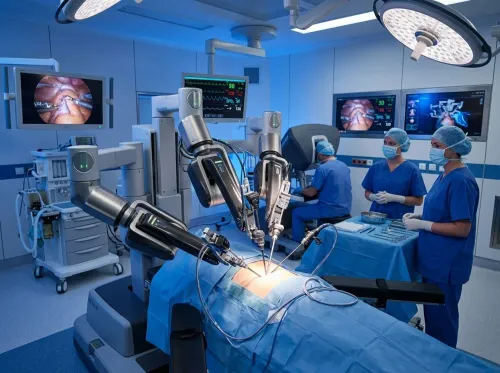
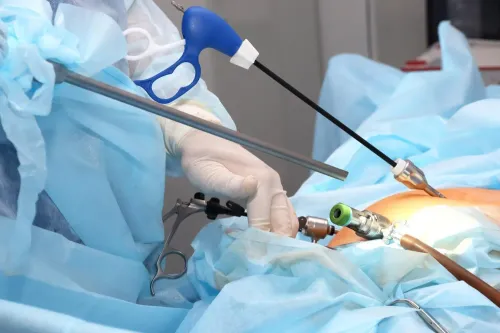
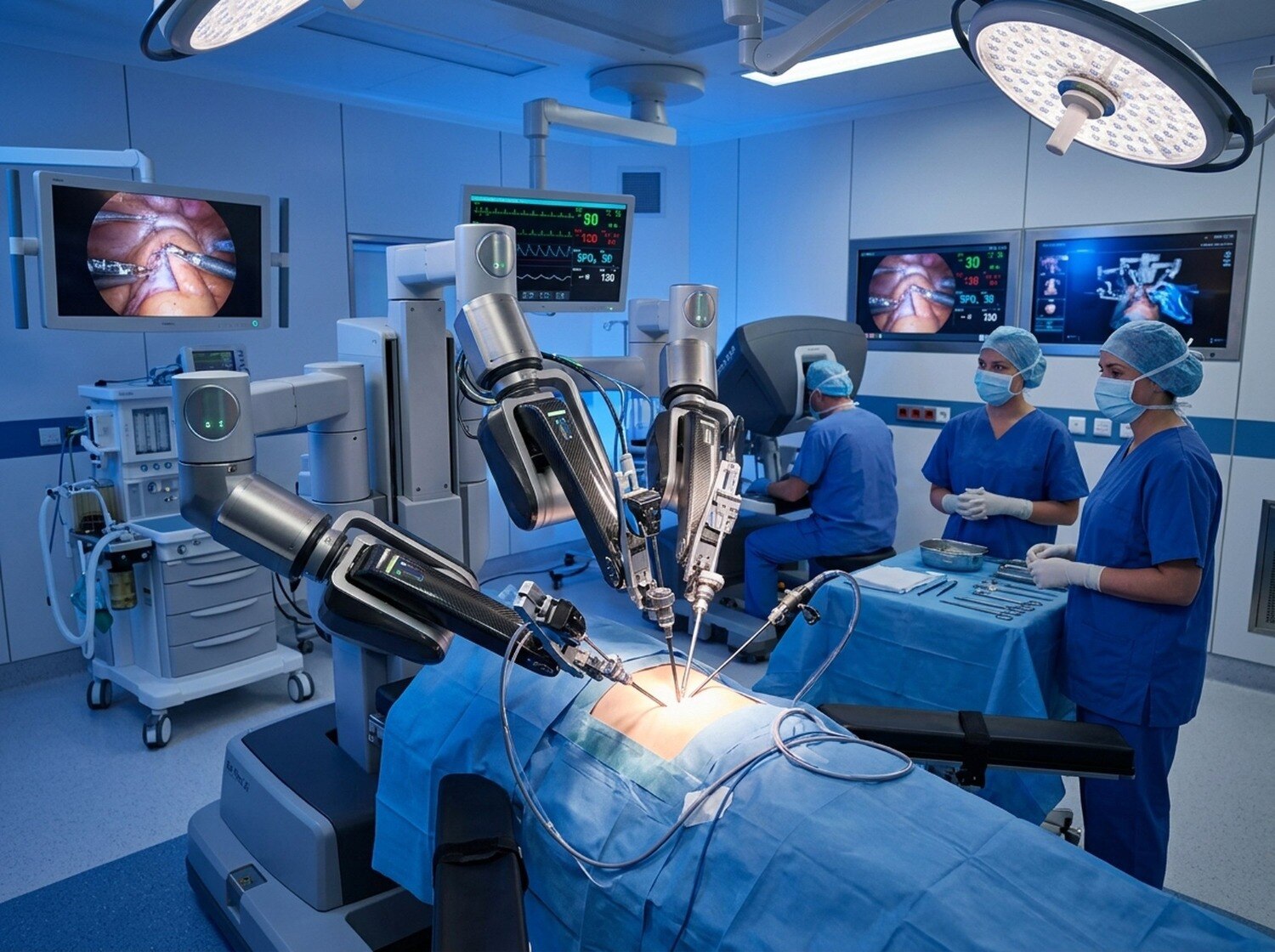
Robotic surgery changes access, not the cancer standard. A surgeon sits at a console and controls slim wristed instruments inserted through small abdominal incisions. The system translates hand movements into precise pelvic movements while providing magnified three-dimensional vision and improved access around deep structures.
The robot is not an autonomous cancer treatment. Cancer control still depends on:
- Correct staging
- Safe tumour removal
- Appropriate cancer-clear margins
- Lymph-node assessment when indicated
Robotic surgery remains a surgeon-led operation requiring specialised training.
| Option | Main advantage | Important limitation |
|---|---|---|
| Robotic surgery | Wristed instruments, ergonomic console control and small incisions | Requires specialised skills and does not suit every tumour |
| Conventional laparoscopy | Small incisions and direct instrument control | Instruments have less articulation and access can be difficult deep in the pelvis |
| Open laparotomy | Direct access, rapid bleeding control and wide exposure | Greater abdominal-wall disruption, incision-related problems and longer recovery |
Compared with open surgery, robotic treatment usually causes less abdominal-wall disruption and supports a shorter hospital recovery when the operation is suitable. Open surgery remains safer when disease is bulky, fixed or widely spread, or when wide exposure and rapid control of major bleeding are needed.
A smaller incision is not automatically safer. Ask whether the proposed approach allows complete, oncologically sound treatment, including staging and lymph-node work. When comparing robotic gynecologic cancer surgery for Pune, judge the operation, cancer stage and team’s experience—not the presence of a robot alone.
Which complex pelvic tumours can be considered for a robotic approach
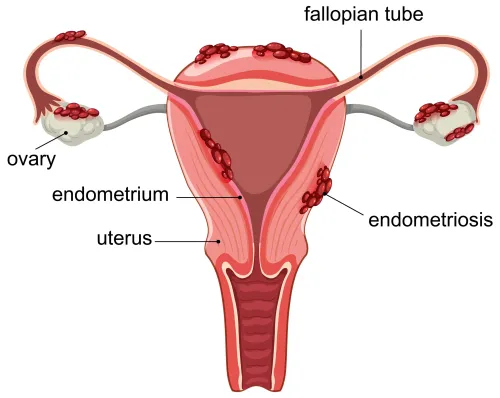
Selected uterine, cervical, ovarian, fallopian-tube, vaginal and pelvic-sidewall tumours can be considered for a robotic approach after staging and specialist review. The tumour’s position, mobility, spread and relationship with nearby organs determine feasibility.
| Tumour site | What specialists assess | Finding that may change the plan |
|---|---|---|
| Uterine | Size, depth, spread and lymph-node risk | Bulky or fixed disease |
| Cervical | Parametrial, ureteric and pelvic-sidewall involvement | Extension around major vessels or nerves |
| Ovarian or fallopian-tube | Spread across the pelvis, abdomen, bowel or diaphragm | Disease requiring extensive cytoreduction |
| Vaginal or pelvic-sidewall | Access, mobility and contact with bladder, rectum, ureter or iliac vessels | Inability to obtain safe margins |
Your work-up commonly includes a pelvic examination, biopsy confirmation, MRI or contrast CT when indicated, chest or abdominal staging scans, blood tests, anaesthesia assessment and review of previous abdominal operations. The team may include a gynaecologic oncologist, radiologist, pathologist, medical oncologist and radiation oncologist.
They assess whether the tumour can be removed completely without unacceptable injury and whether the operation matches its stage and histology. Dense adhesions, previous radiation, distorted anatomy or suspected vessel involvement can make open surgery safer.
Ask:
- Who reviewed the scans and confirmed the pathology?
- Is the diagnosis being re-reviewed by a specialist pathologist?
- Which finding would make open surgery safer?
Patients considering robotic pelvic cancer surgery Pune should receive a specific explanation of resectability, not a promise based only on tumour size or incision length.
How tumour type and stage determine the operation
Tumour type, stage, histology and spread determine the operation—not the presence of a robot. The strongest role for robotic pelvic cancer surgery is selected apparent early-stage endometrial cancer, where total hysterectomy, removal of both tubes and ovaries, and surgical staging may be completed through small incisions.
| Tumour and stage | Operation may involve | Important limit |
|---|---|---|
| Endometrial cancer | Total hysterectomy, bilateral salpingo-oophorectomy and sentinel-lymph-node mapping | Failed mapping, suspicious nodes, high-risk histology or advanced disease may require additional node removal |
| Cervical cancer | Simple or radical hysterectomy, depending on the tumour | Radical hysterectomy removes parametrial tissue and part of the upper vagina; it is not a routine upgrade |
| Ovarian, fallopian-tube or primary peritoneal cancer | Complete gross removal of visible disease | Extensive upper-abdominal, bowel, diaphragmatic or multi-compartment spread often requires open cytoreduction |
| Apparent early ovarian mass | Mass removal with formal staging when cancer is suspected | Avoid rupture and spillage; staging can require washings, peritoneal inspection, omentectomy and selected node assessment |
Robotic surgery is not automatically preferable for cervical cancer. In the randomised LACC trial, three-year disease-free survival was 91.2% after open radical hysterectomy versus 86.0% after minimally invasive surgery, and overall survival was also lower with the minimally invasive approach.
For advanced ovarian, fallopian-tube or primary peritoneal cancer, removing only visible pelvic disease is inadequate if tumour remains elsewhere. Minimally invasive complex gynecologic cancer surgery is reserved for carefully selected cases or interval procedures after systemic treatment; removing only an ovarian mass is not equivalent to cancer staging.
When open surgery or conversion is the safer cancer decision
Open surgery is safer when scans show extensive metastatic disease, the tumour cannot be removed with cancer-clear margins, or rupture and spillage risk is high.
It is also the wrong starting choice when you are medically unstable, anaesthesia risk is unsuitable, or the operation needs immediate access to major vessels or complex bowel surgery beyond the planned team’s scope.
Robotic surgery may be converted to open surgery because of:
- Heavy bleeding
- Dense adhesions
- Unexpected tumour spread
- Poor exposure of the tumour or vital structures
- Anaesthetic concerns
- Inability to achieve cancer-clear margins
Conversion is a safety and cancer-control decision, not proof that the operation failed. Ask about your individual conversion risk before consent and whether the surgeon can perform both minimally invasive and open oncologic surgery.
Complex treatment may involve radical hysterectomy, pelvic or para-aortic lymphadenectomy, ureteric dissection, bowel resection, bladder resection or combined procedures. Discuss ureteric, bladder and bowel injury; lymphoedema; lymphocyst; fistula; blood clots; infection; and reoperation.
Enhanced recovery can include limited fasting, multimodal pain relief, clot prevention, early walking and feeding when safe. A short admission does not complete cancer treatment: final pathology can determine chemotherapy, radiation or further surgery.
How to choose the team for a robotic cancer operation in Pune
Choose a robotic onco gynecologist in Pune who can explain and perform both minimally invasive and open oncologic surgery. At consultation, ask for the tumour’s histologic type, grade, stage, scan findings and exact operation proposed.
Ask these questions:
- Will the operation include sentinel-node mapping, full lymphadenectomy, bowel or bladder support, or ureteric dissection?
- How will the pathology team assess margins, lymph nodes and the final specimen?
- Which specialists will review the case: gynaecologic oncology, radiology, pathology, medical oncology and radiation oncology?
- Is chemotherapy or radiation expected before or after surgery?
- How will the team manage conversion to open surgery, major bleeding, ureteric or bowel injury, and unexpected spread?
Robotic capability | Open-surgery capability | Why you need both Surgeon’s experience | Performs the planned procedure robotically | Controls bleeding and completes complex cancer surgery through laparotomy | Conversion can protect margins and patient safety Hospital support | Robotic instruments, anaesthesia and trained theatre staff | Blood bank, bowel or bladder specialists and intensive monitoring | Complex pelvic surgery may require rapid additional help Pathology service | Reviews margins, nodes and specimen orientation | Provides the same oncologic assessment after open surgery | Final pathology determines the next treatment
Dr.Kunaal Shinde- Gynaec Laparoscopic Surgeon Pune can be considered when you need discussion focused on advanced minimally invasive gynaecologic surgery and cancer-related pelvic decisions. Take your biopsy report, imaging discs and reports, prior operation notes, medication list and medical history.
The key question is whether the surgeon, hospital, pathology service and multidisciplinary plan fit your cancer—not whether a robot is available.
Frequently asked questions
What does robotic surgery change in gynecologic cancer treatment?
It changes surgical access through small abdominal incisions, with wristed instruments and magnified three-dimensional vision. It does not change cancer staging or the goal of complete, safe treatment.
Which complex pelvic tumours can be considered for robotic surgery?
Selected uterine, cervical, ovarian and other pelvic tumours can be considered after reviewing tumour type, size, location, stage and involvement of nearby organs.
When is open surgery safer than robotic pelvic cancer surgery?
Open surgery is safer when the tumour is extensive, involves major vessels or multiple organs, requires broad removal, or cannot be removed completely through a minimally invasive approach.
Why might a robotic operation be converted to open surgery?
The surgeon may convert when bleeding, tumour spread, difficult anatomy or the need for wider cancer clearance makes open access safer.
How should you choose a robotic cancer surgery team in Pune?
Ask about the surgeon’s gynecologic oncology training, experience with complex pelvic tumours, staging and conversion planning, and access to multidisciplinary cancer care.