
A surgeon’s general laparoscopy credentials do not show whether they can assess or treat deep endometriosis affecting the bowel, bladder, ureter or diaphragm. By checking training, case experience, imaging review, fertility planning, hospital support and follow-up arrangements, you can compare consultations on evidence rather than promotional claims.
Key takeaways
- Verify NMC registration and recognised postgraduate gynaecology qualifications.
- Ask how many deep endometriosis operations the surgeon performs each year.
- Request a clear explanation of organ risks, fertility effects and alternatives.
- Confirm hospital support, written consent and scheduled postoperative follow-up.
Verify the surgeon’s training and endometriosis experience
A surgeon who performs routine diagnostic laparoscopy is not automatically trained to treat deep endometriosis. Verify the doctor’s registration in the National Medical Commission’s Indian Medical Register and ask to see a recognised postgraduate qualification in gynaecology. A short course, online certificate or device-training certificate does not replace specialist training or demonstrated experience.
Ask for the surgeon’s personal experience with the operation you may need, not the hospital’s total laparoscopic case count:
- Superficial peritoneal disease and ovarian endometriomas
- Ureterolysis, bladder repair and disease in the rectovaginal septum
- Bowel shaving, discoid excision or segmental bowel resection
- Disease affecting the diaphragm, with thoracic support when required
- Fertility-preserving surgery and management of ovarian reserve
The surgeon should review your actual MRI or ultrasound images, not only the written report, and explain which disease locations they suspect. Ask where complex surgery takes place and whether 24-hour anaesthesia, blood-bank access, intensive-care support, and colorectal and urology backup are available.
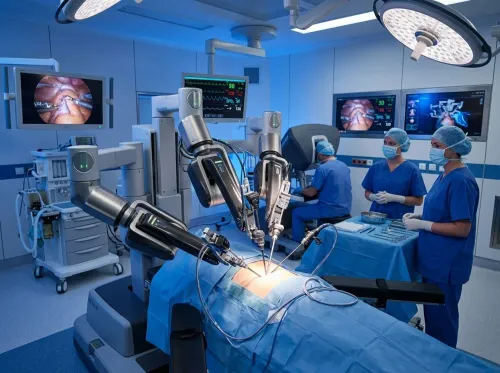
Robotic assistance is a platform, not proof of better endometriosis results. Compare the surgeon’s experience with your specific procedure, operating time, total cost and whether the robot changes the clinical plan. A search for “choose endometriosis surgeon pune” or “laparoscopy surgeon qualifications” should lead to questions, not a decision.
Request copies of your imaging, operative note and pathology report for a second opinion.
Use the consultation to test the diagnosis and the need for surgery
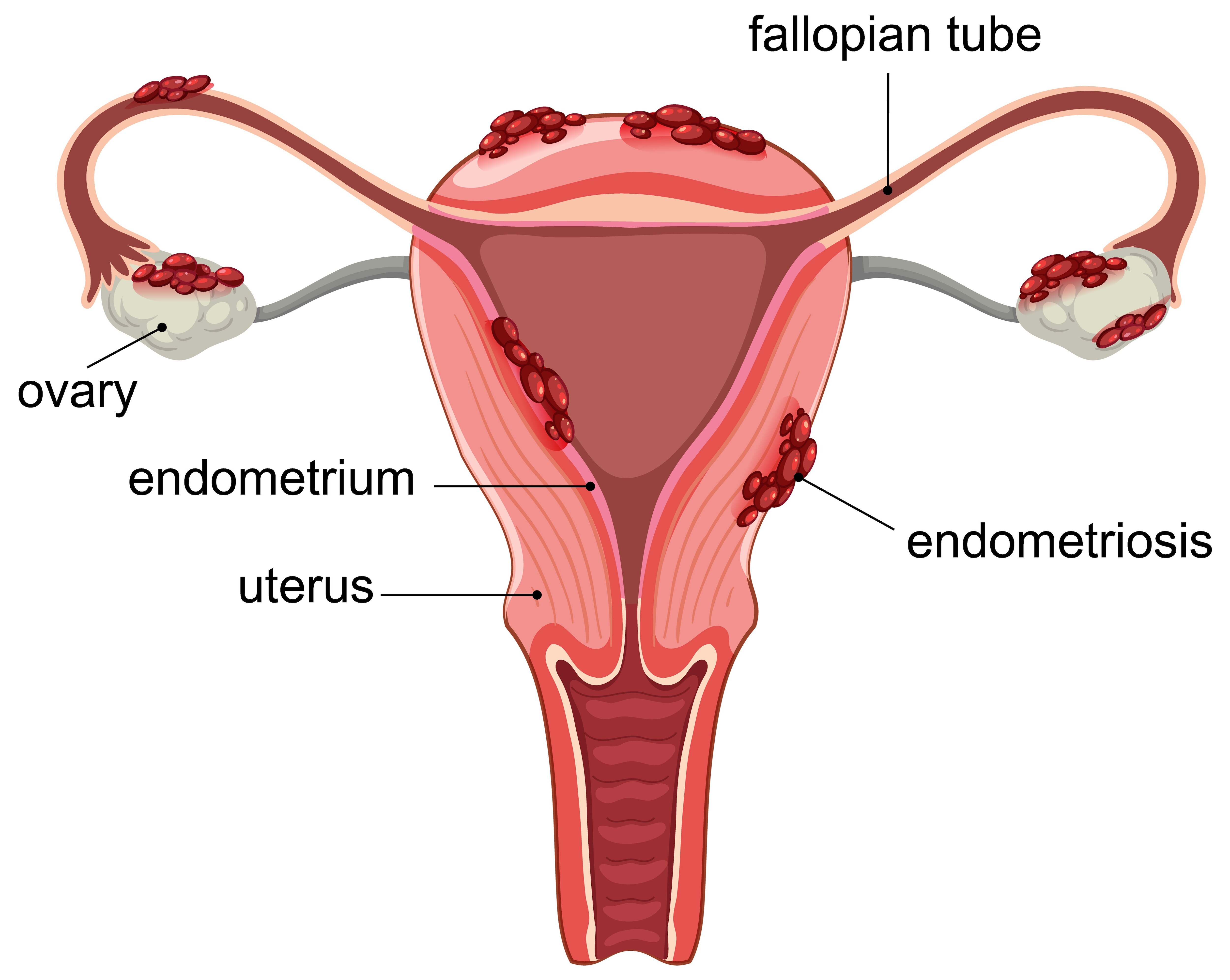
Pain severity alone does not prove that endometriosis requires an operation. Ask the surgeon to connect your symptoms with examination findings, transvaginal ultrasound or MRI results, and the suspected disease sites. A scan should identify whether lesions involve the ovaries, bowel, bladder, ureter, rectovaginal septum or diaphragm—not merely say “endometriosis present.”
Use these laparoscopy specialist pune questions during the appointment:
1. “What else could explain my symptoms, and what finding confirms endometriosis?” Ask whether the diagnosis is clinical, imaging-based or dependent on laparoscopy and tissue examination.
2. “Where exactly is the disease, and how deep is it?” Request a plain-language explanation of each lesion, including whether bowel, ureter or bladder surgery could be needed. Ask whether the surgeon personally performs bowel shaving, discoid or segmental resection, ureterolysis, bladder repair and endometrioma surgery when relevant.
3. “What is the benefit of operating now?” The answer should address pain, organ obstruction, recurrence risk and your goals—not a routine promise that surgery will improve fertility.
4. “What can I try instead?” Discuss analgesics, hormonal treatment, observation, fertility-directed care, and referral to pain or pelvic-floor services. If an endometrioma or previous ovarian surgery affects ovarian reserve, request reproductive-medicine advice before consenting.
Take written answers to your endometriosis surgery consultation pune appointment. A vague scan explanation or automatic recommendation for surgery warrants a second opinion.
Compare the proposed operation, organ risks and fertility trade-offs
The right operation must match lesion depth, location and your fertility priorities—not simply the equipment available. Ask whether the plan is excision, ablation or a combination, and request an explanation of how scans support that choice.
| Technique | What it does | Risks and trade-offs to clarify |
|---|---|---|
| Excision | Removes lesions for pathological assessment; suits some deep disease | Ask about bowel, bladder, ureter or rectovaginal injury, and whether organ repair teams are available |
| Ablation | Destroys visible surface lesions | It may not treat deeply infiltrating disease; ask how recurrence or residual disease will be assessed |
| Robotic assistance | Adds a surgical platform to laparoscopy | It is not proof of better outcomes; compare the surgeon’s exact-procedure experience, operating time, total cost and emergency support |
Use this endometriosis expert Pune laparoscopy for checklist questions before consenting:
- If disease involves the bowel, ask whether bowel shaving, discoid excision or segmental resection is planned, and who performs it.
- If it involves the ureter or bladder, ask about ureterolysis, stenting, bladder repair and urology backup.
- If an endometrioma is present, ask how much ovarian tissue could be removed and how ovarian reserve will be protected.
- Ask whether repeated ovarian surgery could reduce reserve, and obtain a reproductive-medicine opinion before operating if age, prior surgery, endometrioma size or assisted reproduction affects your timeline.
A fertility plan should state whether you will try naturally, freeze eggs or use IVF, and when. To choose endometriosis surgeon Pune patients should compare the proposed organ-specific operation, not a generic “laparoscopy” label.
Check hospital support, consent details and the follow-up plan
Confirm the hospital can manage the operation’s worst credible complication, not just perform routine laparoscopy. Ask whether it has 24-hour anaesthesia, blood-bank access, intensive-care support and immediate access to colorectal and urology surgeons; disease near the diaphragm may also require thoracic backup.
At your endometriosis surgery consultation in Pune, record these answers before signing consent:
1. Ask which hospital will admit you, who has operating privileges there, and whether the facility can manage bowel resection, bladder repair, ureterolysis or a urinary stent if the findings require it. Confirm whether robotic equipment changes the plan, operating time or total cost rather than assuming it improves the result.
2. Request a written explanation of injury risks, conversion to open surgery, transfusion, infection, clots, adhesions, recurrence and possible temporary stoma. The consent form should name the planned procedure and state what additional treatment you authorise if unexpected deep disease appears.
3. Get practical recovery instructions: expected hospital stay, catheter duration, pain-control plan, wound care, bowel and bladder warning signs, driving restrictions and the date you can return to work. Know whom to call at night if fever, heavy bleeding, vomiting, inability to pass urine or worsening pain develops.
4. Fix the follow-up appointment before surgery. Confirm when pathology and operative photographs will be reviewed, how persistent symptoms will be assessed and whether fertility or ovarian-reserve care is available.
Review the laparoscopy surgeon qualifications, hospital team and written plan together. A recognised qualification alone cannot confirm adequate emergency support.
Turn the answers into a shortlist and a safer second opinion
Score every Pune surgeon against the same evidence, then take your records to the strongest two candidates. An endometriosis expert Pune laparoscopy checklist should separate routine laparoscopy from deep disease surgery.
| Check | Surgeon A | Surgeon B |
|---|---|---|
| Registration and training | NMC registration and recognised postgraduate gynaecology qualification | NMC registration and recognised postgraduate gynaecology qualification |
| Relevant personal experience | Bowel, bladder, ureter, rectovaginal or diaphragm cases; exact procedure numbers | Bowel, bladder, ureter, rectovaginal or diaphragm cases; exact procedure numbers |
| Surgical plan | Excision, ablation or both, based on reviewed images | Excision, ablation or both, based on reviewed images |
| Safety support | 24-hour anaesthesia, blood bank, intensive care, colorectal and urology backup | 24-hour anaesthesia, blood bank, intensive care, colorectal and urology backup |
| Follow-up | Complication access, pathology review and fertility or pain plan | Complication access, pathology review and fertility or pain plan |
Bring your symptom timeline, medication list, previous operative notes, pathology reports, ultrasound or MRI images, and fertility history. Ask the surgeon to inspect the actual images, not only the radiologist’s report, and request copies of the proposed consent form and operation plan.
Use these laparoscopy specialist Pune questions: “How many bowel shavings, discoid resections, segmental resections, ureterolysis procedures, bladder repairs and endometrioma operations have you personally performed?” Confirm where surgery occurs and who joins if disease extends beyond gynaecology.
If you are assessing Dr.Kunaal Shinde- Gynaec Laparoscopic Surgeon Pune, apply this same evidence-based comparison rather than choosing on a broad service label. A second opinion is safer when both surgeons receive identical records and answer the same questions.
Related services
Laparoscopy Surgery Diagnostic Hystero Laparoscopy Lap Surgery for Endometrisis Lap Surgery for Ectopic Pregnancy Lap Surgery for uterine Anomalies Lap Cerclage... View service → |
Gynaec Laparoscopic Surgery Gynecologic laparoscopic surgery is a minimally invasive procedure that allows a surgeon to diagnose and treat gynecological conditions. View service → |
Frequently asked questions
How do I verify an endometriosis surgeon’s qualifications in Pune?
Check the surgeon’s registration in the National Medical Commission’s Indian Medical Register and ask for a recognised postgraduate qualification in gynaecology. A short course or device-training certificate does not replace specialist training.
What should I ask during an endometriosis surgery consultation?
Ask how the diagnosis was confirmed, whether surgery is necessary, what alternatives exist, how much deep endometriosis experience the surgeon has and which organs could be affected.
How should I compare proposed endometriosis operations?
Compare the surgical approach, expected removal of disease, risks to the bowel, bladder, ureters and ovaries, recovery time, and potential effects on fertility.
What hospital and follow-up details should I confirm?
Check whether the hospital has anaesthesia, imaging, blood-bank and relevant surgical support. Request written consent details, emergency instructions, medication guidance and a defined follow-up schedule.