
A robotic operation is not a separate cancer treatment: it is one way to perform staging or tumour-reduction surgery. By the end, you will know when robotic surgery is reasonable, when open surgery or chemotherapy-first treatment is safer, and how to assess an ovarian cancer team in Pune.
Key takeaways
- Confirm cancer stage and surgical safety before choosing robotic treatment.
- Ask how robotic surgery compares with laparoscopy and open staging surgery.
- Discuss conversion to open surgery, complications and chemotherapy timing.
- Choose a surgeon with gynecologic oncology experience and hospital support.
When is robotic surgery appropriate for an ovarian cancer diagnosis?
A suspicious ovarian mass is suitable for robotic surgery only after an oncology-led assessment confirms that minimally invasive staging or treatment is safe. A simple, thin-walled ovarian cyst is not the same diagnosis as a complex mass with solid areas, papillary projections or blood flow.
1. Review menopausal status and ultrasound findings. Postmenopausal masses, bilateral lesions, irregular walls, solid components and nodules raise concern. CA-125 supports risk assessment but cannot diagnose or exclude cancer; endometriosis, fibroids and infection can raise it, while cancer can occur with a normal result.
2. Use CT or MRI to assess tumour size, ascites, enlarged nodes, peritoneal deposits, bowel or upper-abdominal involvement and evidence of spread. Dense adhesions, a fixed mass or suspected rupture can make robotic surgery unsafe or change the operation to open surgery.
3. Do not remove only the visible mass when cancer is suspected. That approach can rupture the tumour or leave the disease under-staged. A gynaecologic oncology team must plan staging, cytoreduction or chemotherapy first; advanced disease may need tissue diagnosis before neoadjuvant chemotherapy.
Pathology determines whether the disease is epithelial ovarian, fallopian-tube, primary peritoneal, borderline, germ-cell or sex-cord stromal cancer. Each type changes staging, fertility-sparing choices and drug treatment. Multidisciplinary review should weigh imaging, surgical findings, pathology, fitness and fertility goals before selecting robotic surgery for ovarian cancer.
Anyone searching for robotic ovarian cancer surgery for Pune should assess the oncology pathway, not the robot alone.
What does robotic ovarian cancer surgery involve?
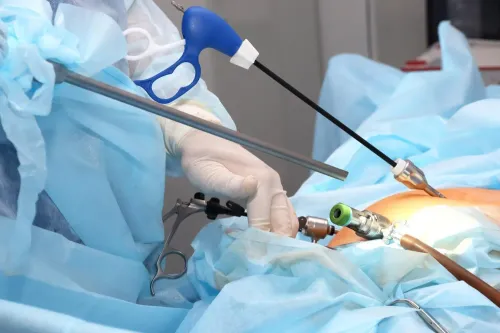
Robotic surgery for ovarian cancer is a cancer-staging or tumour-removal operation, not simply excision of the visible ovarian mass. Removing only that mass can leave disease elsewhere and under-stage the cancer, leading to an incomplete treatment plan.
For apparently early disease, the operation can include:
- Peritoneal washings collected before handling the tumour
- Inspection and palpation of the abdominal lining, diaphragm, bowel surfaces and pelvis
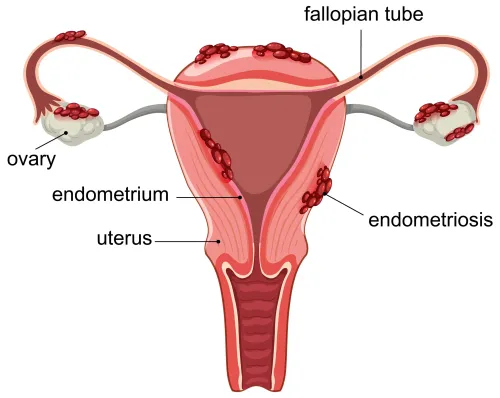
- Removal of the affected ovary and fallopian tube, called unilateral salpingo-oophorectomy
- Removal of both adnexa, with hysterectomy when stage, histology or disease distribution requires it
- Omentectomy, peritoneal biopsies and lymph-node assessment according to tumour type and stage
| Disease setting | Main surgical objective | What determines the extent |
|---|---|---|
| Apparently early disease | Complete surgical staging | Histology, spread found at inspection, laterality and lymph-node risk |
| Advanced disease | Cytoreduction or debulking | Remove all visible tumour when safely achievable, including disease on peritoneum or upper-abdominal organs |
Before surgery, discuss fertility preservation if future pregnancy matters. Stage, tumour type, one-sided versus two-sided disease, genetic risk and planned chemotherapy determine whether conserving the uterus and opposite ovary is safe. A robotic approach does not make fertility-sparing surgery appropriate by itself.
Germline testing and tumour testing form part of treatment and family-risk planning, even without a strong family history. BRCA-related changes and homologous-recombination findings can influence treatment decisions, relatives’ testing and counselling. Borderline, germ-cell and sex-cord stromal tumours require different staging and fertility decisions from epithelial ovarian, fallopian-tube or primary peritoneal cancers.
How does robotic surgery compare with laparoscopy, open surgery and chemotherapy first?
The best fit depends on stage, tumour distribution and the operation required—not on the presence of a robotic machine. Apparently early-stage disease with limited tumour burden, favourable anatomy and no evidence of bowel or upper-abdominal spread is the strongest setting for minimally invasive ovarian cancer surgery in Pune.
| Option | What it means | When it applies |
|---|---|---|
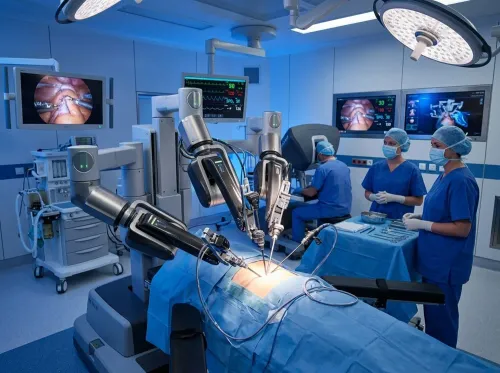
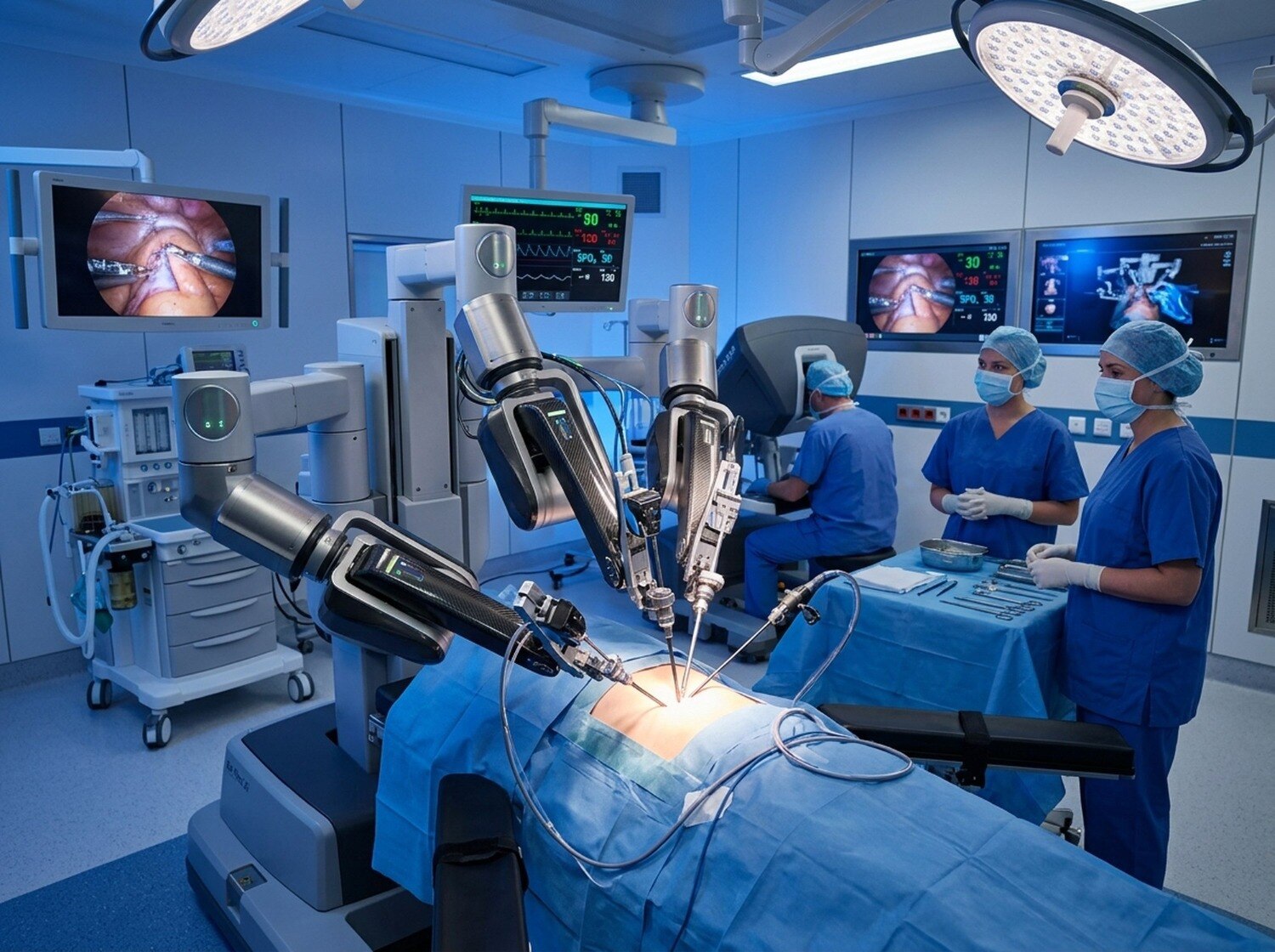
| Robotic surgery | Wristed instruments, three-dimensional vision and ergonomic control | Carefully selected early-stage disease; these features do not prove better survival or lower recurrence |
| Conventional laparoscopy | Straight instruments through small ports | Similar selected cases when staging can be completed safely |
| Open laparotomy | A larger incision providing rapid, broad abdominal access | Extensive disease, complex debulking or anatomy that limits safe minimally invasive surgery |
| Chemotherapy first | Neoadjuvant chemotherapy followed by interval surgery | Suspected advanced epithelial cancer when immediate complete cytoreduction seems unlikely or unsafe |
Extensive peritoneal disease, bowel or upper-abdominal involvement, a large or fixed mass, substantial ascites, unstable health or an expected need for complex debulking can favour open surgery. A robot does not compensate for residual tumour or incomplete staging.
For suspected advanced epithelial cancer, the decision may be primary cytoreduction or chemotherapy first followed by interval surgery. Obtain tissue diagnosis and multidisciplinary review before choosing neoadjuvant treatment; pathology confirms the cancer type and helps determine whether chemotherapy is appropriate.
For someone considering robotic ovarian cancer surgery for Pune, the key question is whether the team can achieve the required cancer operation safely, not whether the platform is available.
What are the practical benefits, risks and limits of a robotic operation?
Smaller incisions from robotic surgery for ovarian cancer can reduce wound discomfort and help you walk sooner than after open surgery. Selected patients also experience less blood loss and a shorter hospital recovery, but these benefits are not guaranteed.
| Option | Practical benefit | Main limitation |
|---|---|---|
| Robotic surgery | Three-dimensional vision and wristed instruments through small incisions | Higher equipment cost than conventional laparoscopy and possible longer operating time |
| Conventional laparoscopy | Small incisions with lower equipment cost | Straight instruments and less ergonomic control |
| Open laparotomy | Broad, rapid access to the abdomen for extensive disease | More wound discomfort and a longer recovery |
The case for minimally invasive ovarian cancer surgery in Pune is strongest when tumour burden is limited and imaging shows no likely need for bowel or upper-abdominal surgery. Disease filling the upper abdomen, bowel involvement, dense adhesions or unsafe anatomy can make robotic access inadequate. The team must be ready to perform a larger operation.
Ask how often the surgeon converts to open surgery and what triggers that decision. Bleeding, dense adhesions, tumour rupture, unexpected spread, unsafe anatomy, or inability to complete staging or debulking through the ports can require open laparotomy. Conversion protects you; it is not proof that the operation failed.
Also ask for rates of complete gross resection, major complications, readmission and reoperation. A robotic platform does not guarantee better cancer control than properly performed laparoscopy or open surgery.
How should you choose an ovarian cancer robotic surgeon in Pune?
A robotic platform is only one part of the decision. For an ovarian cancer robotic surgeon in Pune, ask whether a gynaecologic oncologist leads the case and how many ovarian cytoreduction procedures the team performs each year.
Ask for these figures and arrangements:
- What proportion of suitable cases is completed robotically?
- Which findings trigger conversion to open laparotomy: dense adhesions, bleeding, tumour rupture, unsafe anatomy, bowel involvement or extensive upper-abdominal disease?
- Can the hospital perform bowel, diaphragm or other upper-abdominal procedures when complete cytoreduction requires them?
- Does the team audit complete gross resection, serious complications, readmission and reoperation?
The wider pathway matters as much as the operation.
| Service | What to verify | Why it matters |
|---|---|---|
| Specialist pathology | Rapid tissue diagnosis and review by a gynaecologic pathologist | Confirms tumour type and stage |
| Cancer treatment | Medical oncology, chemotherapy and intensive care | Supports treatment before or after surgery |
| Ongoing care | Genetic counselling and testing, clot prevention, infection management and surveillance | Reduces avoidable risk and guides family and follow-up decisions |
Robotic ovarian cancer surgery for Pune patients is safest to consider where this coordinated support exists, not where a hospital merely owns a robot. A consultation with Dr.Kunaal Shinde- Gynaec Laparoscopic Surgeon Pune can help you compare imaging, pathology, surgical alternatives, fertility priorities and the postoperative cancer pathway before choosing.
Related service
Gynaec Onco Surgery Cervical Cancer Ovarian Cancer Uterine Cancer Fallopian Tube Cancer Vulvar Cancer View service → |
Frequently asked questions
When is robotic surgery appropriate for an ovarian cancer diagnosis?
An oncology-led assessment must confirm that minimally invasive staging or treatment is safe. The decision depends on the mass appearance, suspected stage, spread, overall health and the surgeon’s ability to remove disease completely.
What does robotic ovarian cancer surgery involve?
The surgeon operates through small abdominal incisions using a robotic system, removes or biopsies suspicious tissue and performs the planned staging or treatment procedure. The exact operation depends on the diagnosis and disease spread.
How does robotic surgery compare with laparoscopy, open surgery and chemotherapy first?
Robotic surgery and conventional laparoscopy are minimally invasive approaches, while open surgery uses a larger abdominal incision. Open surgery may be necessary for extensive disease, and chemotherapy first may be considered when immediate complete surgery is unlikely to be safe or effective.
What are the practical benefits, risks and limits of a robotic operation?
Potential benefits include smaller incisions and recovery considerations, but robotic surgery still carries risks such as bleeding, infection, organ injury, blood clots and conversion to open surgery. It cannot replace sound staging or complete cancer treatment.
How should you choose an ovarian cancer robotic surgeon in Pune?
Ask about gynecologic oncology training, experience with ovarian cancer staging and cytoreduction, expected alternatives, hospital intensive-care and oncology support, complication rates and the plan if open surgery becomes necessary.