
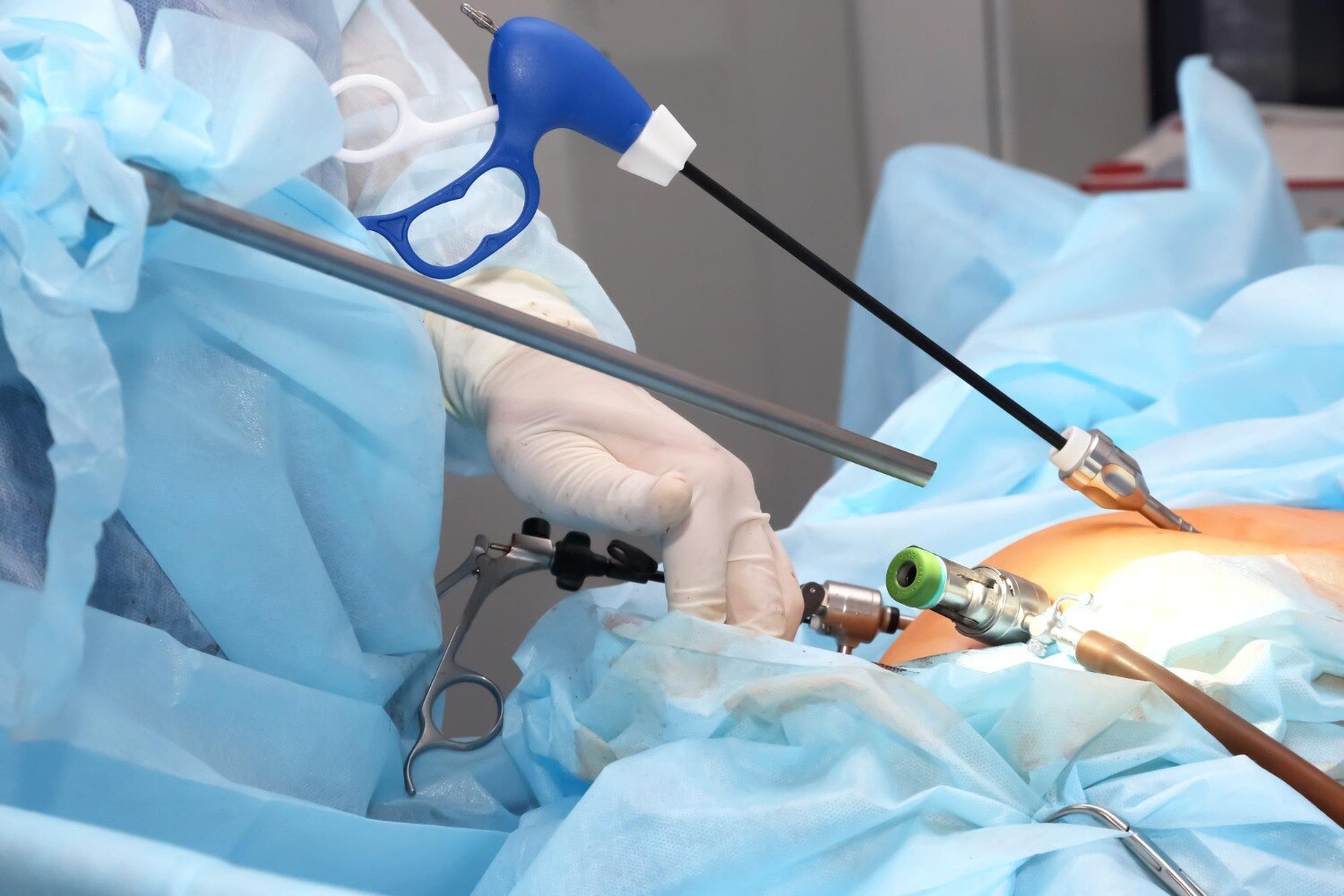
Laparoscopic surgery can support accurate ovarian cancer staging when the team completes the same essential surgical and pathological assessment required in open surgery, removes the tumour safely and selects the approach for the disease pattern. You will learn which tests and staging steps matter, when laparoscopy is suitable, when open surgery is safer, and how to assess a Pune hospital and surgical team.
Key takeaways
- Complete staging requires surgical inspection, washings, biopsies and pathology.
- Imaging suggests disease extent but cannot confirm microscopic spread.
- Choose laparoscopic, robotic or open surgery based on safety and staging completeness.
- Ask about fertility impact, recovery, conversion to open surgery and oncology expertise.
What accurate ovarian cancer staging involves beyond removing a mass
Laparoscopic ovarian cancer surgery for support accurate staging Pune is appropriate only when it permits a complete oncologic staging operation, not merely removal of an ovarian mass. A camera image cannot establish stage; pathology must confirm what the surgeon sees and detect microscopic disease.
1. FIGO staging assesses both ovaries, fallopian tubes, uterus, pelvic and abdominal peritoneum, omentum, diaphragm surfaces, lymph nodes and every visible area of spread.
2. Collect peritoneal washings or ascitic fluid before touching or manipulating the tumour. Malignant cells in these samples can classify an otherwise stage-I cancer as FIGO stage IC3.
3. Inspect the pelvis and entire abdominal cavity systematically. Biopsy suspicious deposits and selected normal-looking peritoneal areas, because microscopic cancer can hide where the surface appears clear.
4. When indicated, perform an infracolic omentectomy, hysterectomy with removal of both fallopian tubes and ovaries, and pelvic or para-aortic lymph-node assessment. Fertility-sparing surgery is a separate, carefully selected option that still requires appropriate staging.
5. Distinguish diagnostic laparoscopy from routine laparoscopic ovarian cyst removal. Diagnostic laparoscopy may map disease, obtain washings and biopsies, and determine whether complete staging or cytoreduction is feasible; cyst removal alone does not answer those questions.
A complete ovarian cancer staging surgery therefore depends on the samples collected, the areas examined and the pathology report—not on using laparoscopy or robotics by itself.
How imaging, surgery and pathology combine to establish the final stage
Preoperative review begins with pelvic examination and ultrasound, followed by contrast CT or MRI when indicated and chest imaging to look for disease beyond the abdomen. CA-125 supports the assessment but does not diagnose cancer; benign conditions can raise it, and normal levels do not exclude malignancy.
A gynaecologic oncology team should interpret these findings together. Scans and tumour markers suggest disease extent, but neither replaces tissue diagnosis.
1. During ovarian cancer staging surgery, frozen-section pathology can classify an adnexal mass as benign, borderline or malignant while you are anaesthetised, helping the surgeon decide whether to proceed. It is less reliable in large, heterogeneous or borderline tumours because a small sample can miss the most informative area.
2. Permanent histopathology establishes the final diagnosis, tumour subtype and grade. Request separately labelled specimens for peritoneal washings, omentum, each peritoneal biopsy and every pelvic or para-aortic lymph-node packet. Peritoneal cytology and immunohistochemistry add microscopic and lineage information that a camera cannot provide.
3. If imaging suggests advanced disease, diagnostic laparoscopy or a biopsy can confirm histology and show whether complete or near-complete primary cytoreduction is feasible. Chemotherapy before interval surgery follows a different pathway from comprehensive staging of an apparently early-stage cancer; it is not a substitute for full staging when early disease is suspected.
That combined evidence supports gynecologic cancer staging: the surgeon’s findings, sampled tissue, cytology and final pathology—not the scan or visual impression alone—determine FIGO stage.
When laparoscopic, robotic or open staging is the safer choice
Choose the approach that permits complete staging without tumour rupture, spillage or missed disease—not the approach with the smallest incisions.
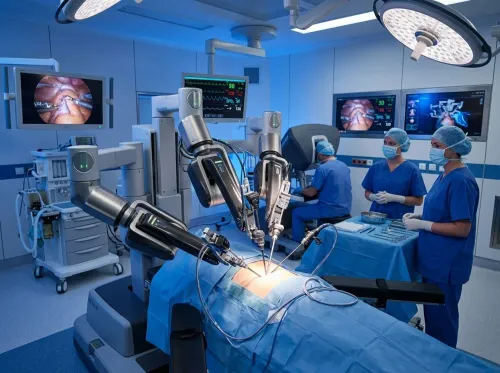
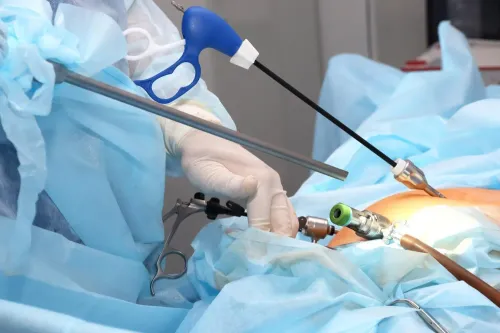
Laparoscopy or robotic surgery can suit a carefully selected apparent early-stage cancer when the mass can be removed intact, every staging sample can be obtained, and tissue can be extracted safely through a containment system or a deliberately enlarged incision.
| Approach | Advantages | When it fits |
|---|---|---|
| Laparoscopic or robotic | Smaller incisions, less short-term pain, fewer wound problems and shorter hospitalisation | Mobile, removable mass with no convincing spread and a plan for complete staging |
| Planned open laparotomy | Wider access, stronger tactile feedback and easier removal of bulky disease | Large or fixed mass, dense adhesions, suspected rupture, bowel or diaphragm involvement, extensive upper-abdominal disease or bulky nodes |
| Conversion to laparotomy | Protects oncologic completeness when minimally invasive access becomes unsafe | Unexpected adhesions, spillage risk, bleeding, difficult extraction or disease requiring extensive cytoreduction |
The trade-off is important: cameras improve visual access, but reduced tactile feedback and instrument limits can make a mass or lymph-node assessment harder. If disease involves the omentum, diaphragm, bowel, liver surface, spleen or extensive retroperitoneal nodes, open surgery may better achieve complete or near-complete cytoreduction.
Unstable health also favours the plan that controls risk most reliably.
For laparoscopic ovarian cancer staging Pune patients should ask how specimens will be contained, whether a larger extraction incision is planned, and when conversion will occur. Conversion is a protective oncologic decision, not automatically a complication. The same principle applies to laparoscopic onco surgery: completeness matters more than the platform.
What recovery, risks and reproductive consequences should you plan for
A laparoscopic ovarian cancer staging operation often means discharge within one to two days, but extensive staging or conversion to open surgery can require several days. Plan prescribed pain medicine, small dressings kept clean and dry, early walking, and no heavy lifting or strenuous exercise until your surgeon clears you.
| Recovery plan | Practical expectation |
|---|---|
| Walking and driving | Walk on the day of surgery; drive only when off opioid painkillers and able to brake comfortably |
| Work and exercise | Desk work may take one to three weeks; heavy work and vigorous exercise take longer, especially after laparotomy |
| Results | Permanent pathology often takes about one to two weeks; it can change the stage and treatment plan |
Do not treat a suspicious, complex, fixed or enlarging mass as an ordinary cyst. Aspiration or rupture can spill tumour cells and compromise staging. Risks include bleeding, infection, bowel, bladder, ureter or blood-vessel injury, blood clots, anaesthesia complications, tumour rupture and conversion to open surgery; lymph-node removal can cause lymphoedema.
Final pathology may lead to chemotherapy or another operation. Budget for consultations, imaging, blood tests, pathology, time away from work and possible adjuvant treatment.
Removing both ovaries causes surgical menopause, with hot flushes, sleep or mood changes, vaginal dryness and long-term bone and cardiovascular considerations. Removing the uterus and ovaries ends fertility.
Fertility-sparing staging, preserving the uterus and opposite ovary, suits only carefully selected early cancers after considering histology, grade, tumour biology and reproductive goals; laparoscopy does not create that option.
How to evaluate a Pune team before consenting to laparoscopic staging
Do not consent because a clinic uses a camera or robot. The phrase “can laparoscopic ovarian cancer surgery for support accurate staging Pune” has a practical answer: accuracy depends on a complete operation, pathology review and a team prepared to change course.
| Approach | Advantage | Risk or limitation |
|---|---|---|
| Laparoscopic | Smaller wounds and quicker short-term recovery | Rupture, limited access or incomplete staging |
| Robotic | Greater instrument articulation | Platform does not replace cancer-surgery experience |
| Open laparotomy | Broad access for extensive disease | More pain, wound recovery and hospital time |
Ask these questions before signing consent:
- Who will perform the operation, and is a gynaecologic oncologist involved? How many cases of laparoscopic ovarian cancer staging Pune does the team perform each year?
- Are peritoneal washings collected before tumour handling, with planned biopsies, infracolic omentectomy and pelvic or para-aortic node assessment?
- Will washings, omentum, each biopsy and every lymph-node packet receive separate labels and review by a pathologist experienced in gynaecologic cancer?
- Is frozen section available during surgery, with permanent histopathology and immunohistochemistry afterward? Are blood-bank, intensive-care, radiology and multidisciplinary cancer-review services available?
- If spread appears, will the team biopsy it, proceed with cytoreduction or stop for chemotherapy? What happens if rupture risk requires a larger extraction incision or conversion to laparotomy?
- Does the plan address fertility preservation, surgical menopause and follow-up?
Experience in laparoscopic onco surgery matters more than “laparoscopic” or “robotic” on a brochure. A second opinion is reasonable. Dr.Kunaal Shinde- Gynaec Laparoscopic Surgeon Pune is a practice you can ask about its oncology pathway, hospital facilities, pathology coordination and reproductive planning.
Seek referral for a persistent, complex or enlarging mass, ascites, bloating, pelvic pain, early satiety or urinary symptoms.
Related services
Gynaec Onco Surgery Cervical Cancer Ovarian Cancer Uterine Cancer Fallopian Tube Cancer Vulvar Cancer View service → |
Gynaec Laparoscopic Surgery Gynecologic laparoscopic surgery is a minimally invasive procedure that allows a surgeon to diagnose and treat gynecological conditions. View service → |
Frequently asked questions
What does accurate ovarian cancer staging involve beyond removing a mass?
It involves inspecting the abdomen and pelvis, collecting peritoneal washings, taking directed biopsies, assessing the omentum and lymph nodes, and sending specimens for pathology. Removing the visible ovarian mass alone does not establish the full stage.
How do imaging, surgery and pathology establish the final stage?
CT or MRI helps map suspected disease before surgery. The operation identifies visible spread and collects tissue samples. Pathology confirms cancer type, grade and microscopic involvement, which determines the final stage and treatment plan.
When is laparoscopic, robotic or open staging safer?
Minimally invasive staging is appropriate only when the team can remove and sample disease safely without tumour rupture or incomplete staging. Open surgery may be safer for extensive disease, large masses, dense adhesions or a high risk of spillage.
What recovery and reproductive consequences should you plan for?
Ask how long hospitalisation, restricted activity and follow-up will last. Depending on cancer type, stage and fertility goals, surgery can affect one or both ovaries, the uterus and future pregnancy options.
How should you evaluate a Pune team before consenting to laparoscopic staging?
Ask who will perform the operation, whether a gynaecologic oncologist is involved, which staging steps are planned, when the team would convert to open surgery, how pathology is reviewed and how fertility concerns will be addressed.