
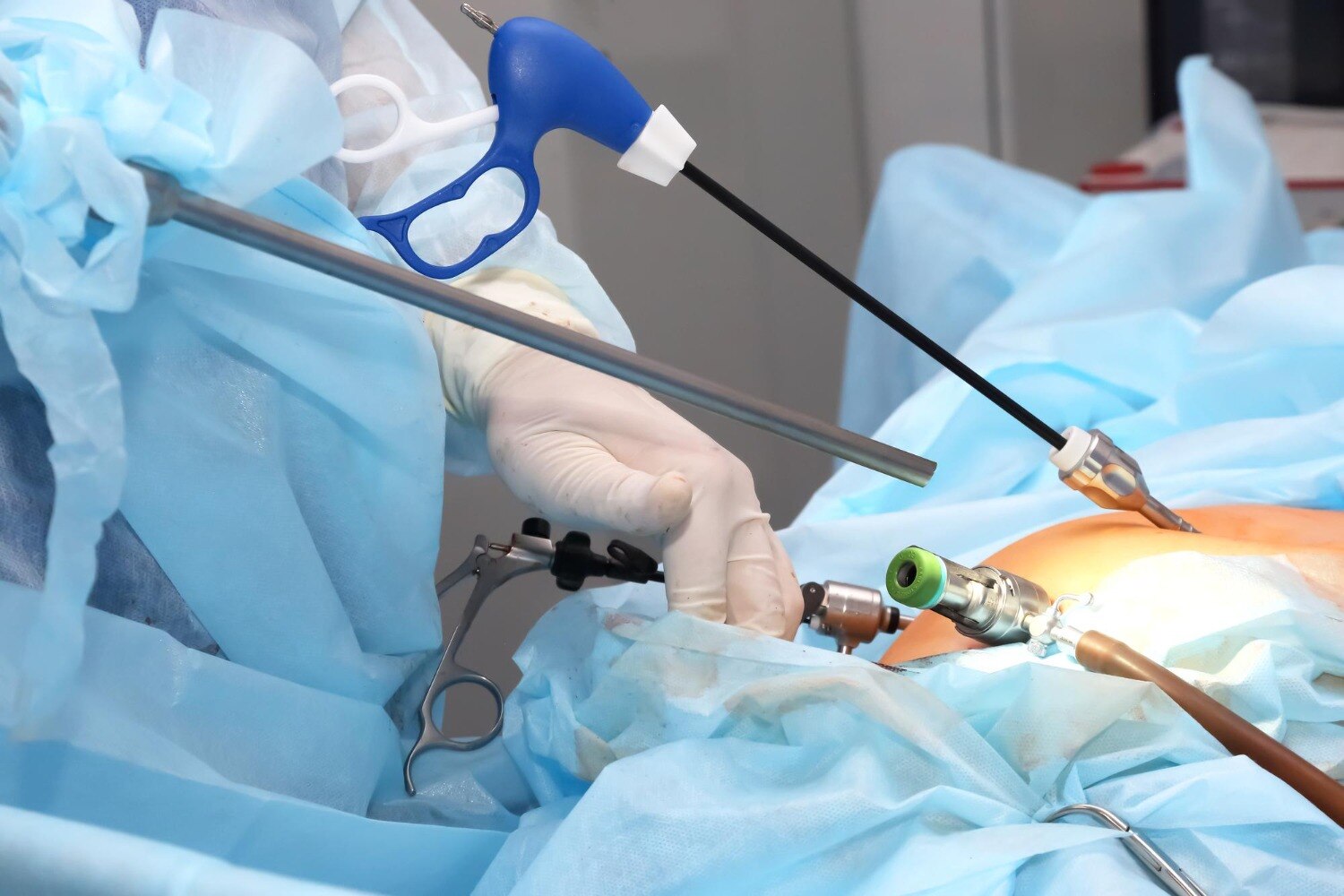
An ovarian mass with suspicious imaging, raised CA-125, ascites or unexpected cancer after surgery does not automatically mean that laparoscopic staging is the right next step. You will learn what complete staging involves, when keyhole surgery is unsafe or incomplete, and which questions to ask before choosing a cancer team in Pune.
Key takeaways
- Staging checks the ovaries, peritoneum, upper abdomen, lymph nodes and distant organs.
- Ask why laparoscopy, robotics, laparotomy, biopsy or surveillance fits your findings.
- Confirm whether frozen section could change the operation during surgery.
- Discuss fertility goals, tumour removal, recovery time and incision-related risks beforehand.
What ovarian cancer staging is meant to find
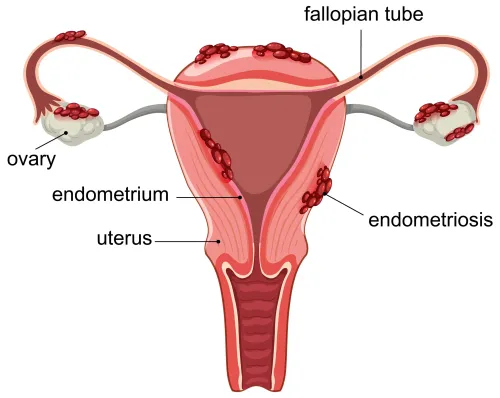
Staging determines whether ovarian cancer is confined to one ovary or fallopian tube, has reached the other ovary, uterus or pelvic peritoneum, or has spread into the upper abdomen, lymph nodes or distant organs.
Doctors may recommend staging surgery after a complex or solid mass appears on ultrasound, CT or MRI; CA-125 or another tumour marker is raised; ascites or peritoneal nodules are present; or cancer is discovered unexpectedly after an earlier operation.
Common reasons for referral include:
- A mass with solid areas, irregular walls or papillary projections on imaging
- Fluid in the abdomen, especially with peritoneal nodules
- A raised CA-125, although this marker alone cannot prove cancer
- Cancer found after removal of an apparently benign ovarian cyst
FIGO stage comes from surgical inspection, washings, biopsies, lymph-node assessment and pathology—not from CA-125 alone or the size of the incisions. Searching for laparoscopic ovarian cancer staging Pune or ovarian cancer staging surgery Pune should lead you to compare the staging plan, not just the surgical approach.
| FIGO stage | Finding | Why accurate sampling matters |
|---|---|---|
| I | Limited to ovary or fallopian tube | Determines whether additional treatment is needed |
| II | Extension within the pelvis | Guides chemotherapy and pelvic treatment |
| III | Upper-abdominal peritoneal spread or retroperitoneal nodes | Usually requires systemic treatment planning |
| IV | Distant organ spread | Changes chemotherapy and broader cancer care |
How doctors choose laparoscopy, laparotomy, robotics, biopsy or surveillance
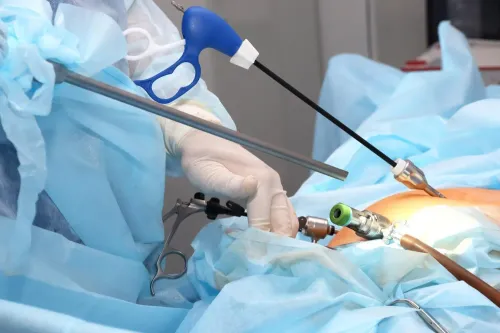
Laparoscopy is not automatic for every suspected ovarian cancer. It suits a mass that appears confined to the ovary or pelvis and can be removed intact without rupture or spillage.
Laparoscopic cancer staging gynecology can also inspect advanced disease and judge whether complete macroscopic resection seems possible, but seeing deposits does not confirm cancer; tissue diagnosis requires biopsy and histopathology.
| Option | What it means | When it applies |
|---|---|---|
| Laparoscopic staging | Keyhole assessment and cancer surgery | Limited-appearing disease, an intact removable mass and a stable patient |
| Laparotomy | Open abdominal operation | Very large mass, extensive CT or MRI disease, dense adhesions, high rupture risk, uncontrolled bleeding risk or a large en-bloc operation |
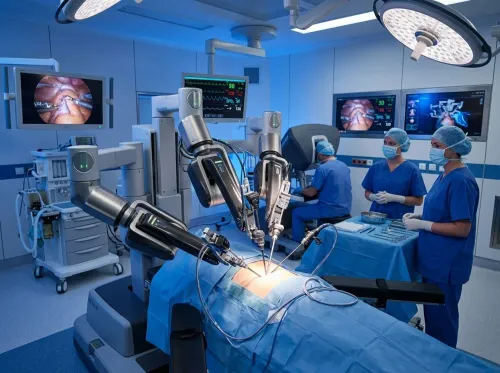
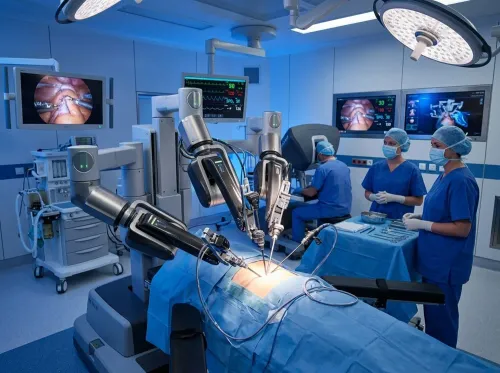
| Robotic surgery | Robot-assisted minimally invasive surgery | Selected cases where the surgeon needs enhanced instrument control; it does not guarantee suitability or better cancer clearance |
| Image-guided biopsy | Needle tissue sampling using ultrasound or CT guidance | When cancer appears unresectable, chemotherapy is planned first, or surgery carries excessive risk |
| Surveillance | Repeat examination, markers or imaging | When imaging favours a benign or indeterminate lesion and immediate tissue removal is not justified |
If complete visible tumour removal appears unlikely, a multidisciplinary team may choose image-guided biopsy, neoadjuvant chemotherapy and interval debulking surgery instead of immediate staging. Searches for laparoscopic ovarian cancer staging Pune describe an approach and location, not an indication. The final choice depends on imaging, tumour biology, medical fitness and specialist review.
What complete laparoscopic ovarian cancer staging includes
Diagnostic laparoscopy only looks for visible disease; complete staging collects evidence and removes tissue for pathology. A camera inspection alone cannot prove that cancer is confined to one ovary or that staging is complete.
A complete laparoscopic operation usually follows this sequence:
1. Collect peritoneal washings before touching or moving the tumour. The fluid is sent for cytology to detect malignant cells.
2. Inspect the pelvis, diaphragm, liver surface, bowel and all visible peritoneal surfaces systematically. The surgical team records findings with photographs, not just a general statement that the abdomen “looked normal.”
3. Biopsy every suspicious nodule, implant or thickened area. These samples can establish spread that the naked eye cannot classify reliably.
4. Remove the affected ovary and fallopian tube, keeping the specimen intact when safe, then perform an infracolic omentectomy. The omentum is a common site for microscopic or visible spread.
5. Assess selected pelvic and para-aortic lymph nodes when the suspected tumour type and operative findings make nodal staging appropriate.
The exact operation depends on suspected histology, fertility plans and visible spread. Someone comparing ovarian cancer staging surgery Pune services or laparoscopic cancer staging gynecology should ask what each proposed package includes. If safe specimen removal or adequate cancer clearance is impossible through keyhole access, the surgeon may convert to laparotomy.
How tumour handling, frozen section and fertility goals change the operation
There is no universal laparoscopy package: the operation changes with tumour handling, frozen-section findings, visible spread, tumour type, age and fertility goals. The surgeon avoids puncturing the ovarian mass and removes it through a protected extraction method to reduce rupture and spillage. Unexpected rupture can change the FIGO stage and treatment plan.
Frozen-section pathology examines tissue during surgery and can distinguish a benign lesion, borderline tumour or invasive cancer, helping guide the immediate operation. It is not perfect: borderline and mucinous tumours are harder to classify, so final paraffin pathology can revise the diagnosis, grade, stage or chemotherapy plan.
Removal decisions may include:
- The affected ovary and fallopian tube when cancer appears limited to one side.
- The uterus, both ovaries and both tubes when disease, histology or completed childbearing makes comprehensive surgery appropriate.
- The omentum and suspicious peritoneal areas when epithelial cancer or visible spread requires assessment.
- Pelvic and para-aortic lymph nodes when the tumour type and staging findings make nodal assessment useful.
Selected young patients with unilateral FIGO stage I disease may have fertility-sparing surgery: removal of the affected ovary and tube while preserving the uterus and opposite ovary, with proper staging. Borderline and non-epithelial tumours can require different operations, including different decisions about nodes and omentum.
Before choosing ovarian cancer staging surgery Pune or an ovarian cancer surgeon Pune, ask how fertility plans and final pathology will change the procedure.
Recovery, risks and the trade-off behind smaller incisions
Laparoscopic staging can be easier to recover from, but it is not safer or simpler in every case. Selected patients may have smaller incisions, less postoperative pain, shorter hospitalisation and faster recovery than open surgery. These benefits do not prove equal cancer outcomes for every stage or tumour type.
The phrase laparoscopic cancer staging gynecology describes an approach, not a guarantee of suitability.
| Approach | Likely recovery | Main trade-off |
|---|---|---|
| Laparoscopy | Less pain and faster recovery | Limited access for bulky or widespread disease |
| Open surgery | Longer recovery and larger incision | Better access for extensive cancer |
| Conversion | Recovery follows open surgery | Protects cancer clearance and patient safety |
Risks include bleeding, infection, blood clots, bowel, bladder, ureteric or vascular injury, port-site hernia, tumour rupture and conversion to open surgery.
Ask whether bowel resection or upper-abdominal procedures might be needed, how long final pathology review will take, and which activity restrictions apply after discharge.
Contact your surgical team urgently for fever, worsening abdominal pain, heavy bleeding, breathlessness or persistent vomiting.
Questions to ask an ovarian cancer surgeon in Pune
Compare an ovarian cancer surgeon in Pune by the staging plan, not by the word “laparoscopic.” Ask these questions before consenting:
1. Do you have gynecologic-oncology training, and how many ovarian cancer staging operations do you perform each year beyond ovarian cyst removal?
2. Will the operation include peritoneal washings, systematic peritoneal and omental assessment, biopsies of suspicious areas, indicated pelvic or para-aortic lymph-node evaluation, and access to frozen-section pathology?
3. Which laboratory will provide expert histopathology review, and when will the final paraffin-section report be available?
4. What is the plan if cancer is found outside the ovary? Ask specifically about conversion to laparotomy, bowel resection, or upper-abdominal procedures.
5. Can medical oncology, radiology, pathology, colorectal surgery, or upper-abdominal surgery join the treatment plan?
Dr.Kunaal Shinde- Gynaec Laparoscopic Surgeon Pune may be relevant for laparoscopic and gynecologic-oncology assessment in Shivajinagar. Compare any ovarian cancer staging surgery Pune or laparoscopic ovarian cancer staging Pune option by tumour characteristics, fertility priorities, conversion policy, annual experience, and multidisciplinary support—not incision size alone.
Frequently asked questions
What does ovarian cancer staging surgery look for?
It checks whether cancer is confined to one ovary or fallopian tube or has reached the pelvis, upper abdomen, lymph nodes or distant organs.
How do doctors choose between laparoscopy, laparotomy, robotics, biopsy and surveillance?
The choice depends on imaging, tumour features, suspected spread, the need for safe tumour removal and whether surgery is appropriate at that point.
What does complete laparoscopic ovarian cancer staging include?
It can include inspection of the abdomen and pelvis, peritoneal washings, biopsies, removal of visible disease and assessment or sampling of relevant lymph nodes.
How can fertility goals change ovarian cancer staging surgery?
When cancer stage and tumour type permit, fertility-sparing surgery may preserve the uterus and unaffected ovary; discuss this before consenting.
What should I ask an ovarian cancer surgeon in Pune?
Ask about the planned staging steps, possible conversion to open surgery, frozen section, fertility options, recovery, complications and further treatment.