
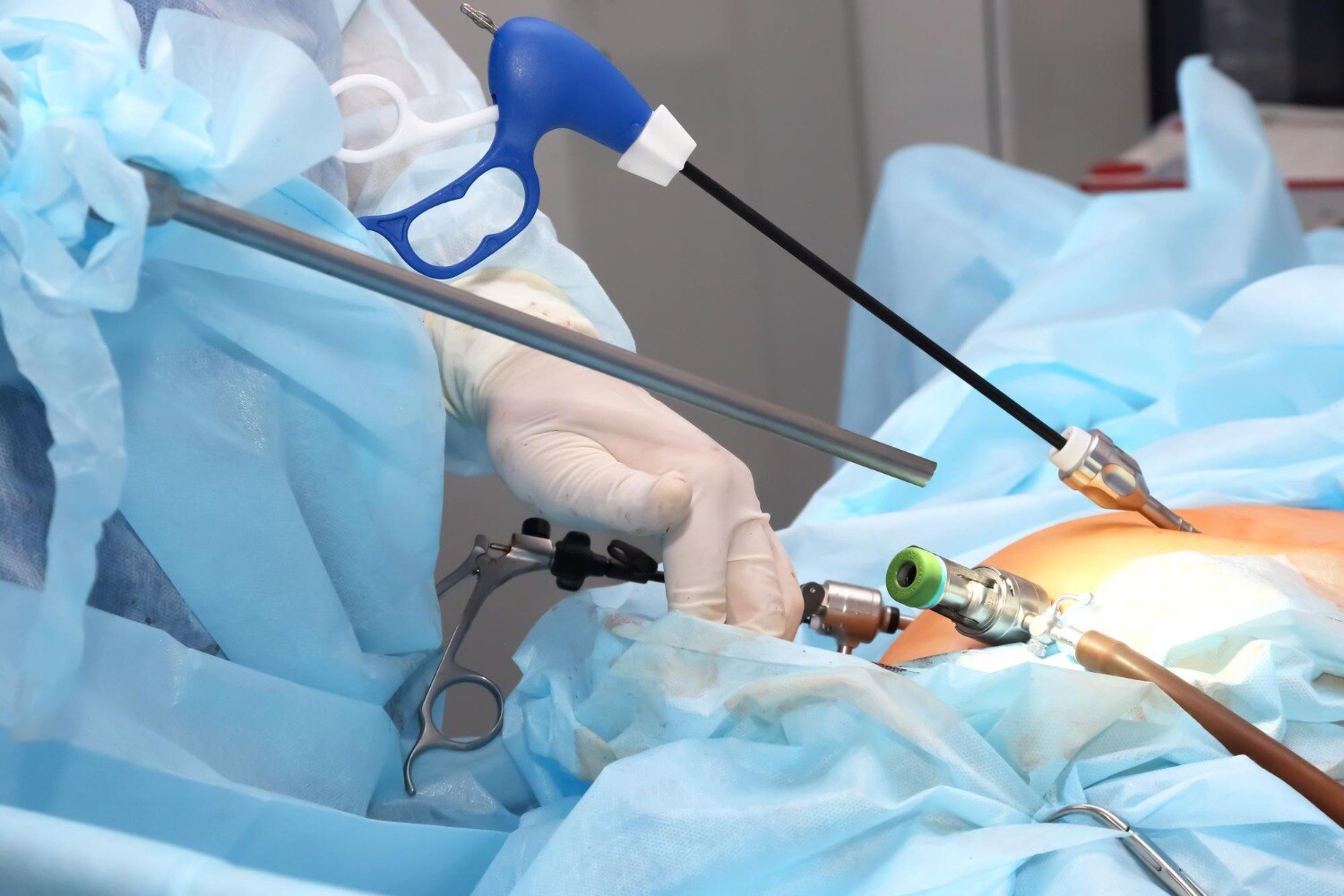
The right operation depends on where the problem sits: inside the uterine cavity, within the muscular wall, on the outer surface, or beyond the uterus. By the end, you will know which investigations determine suitability, how laparoscopy compares with hysteroscopy and open or vaginal surgery, what recovery involves, and which questions to ask a Pune surgical team.
Key takeaways
- Laparoscopy suits selected fibroids, adenomyosis, endometriosis and early uterine cancers.
- MRI, ultrasound, symptoms and fertility plans help determine the safest surgical route.
- Ask how the surgeon will remove tissue and whether contained extraction is planned.
- Compare surgeon experience, conversion rates, recovery guidance and follow-up before choosing care.
Which uterine conditions can laparoscopy treat?
Laparoscopy can treat selected fibroids, adenomyosis, uterine anomalies, endometriosis involving the uterus and some early uterine cancers. Suitability depends on the condition’s location, size, number, depth, symptoms, fertility plans and prior operations—not simply on wanting smaller incisions.
| Condition | Usual route | Key limitation |
|---|---|---|
| Fibroid within or protruding into the cavity | Hysteroscopy through the vagina and cervix | Submucosal position often makes abdominal laparoscopy the wrong route |
| Selected intramural or subserosal fibroid | Laparoscopic myomectomy | Large, numerous or deeply embedded fibroids may require open surgery |
| Adenomyosis | Individualised medical, laparoscopic or uterus-preserving surgery | It spreads through uterine muscle; adenomyomectomy is technically demanding and is not equivalent to removing one fibroid |
| Septate or bicornuate uterus | Hysteroscopic or laparoscopic repair, depending on the anomaly | The anatomy must be mapped before choosing access |
| Intrauterine adhesions or polyps | Hysteroscopy | These project into the cavity and are reached through the cervix |
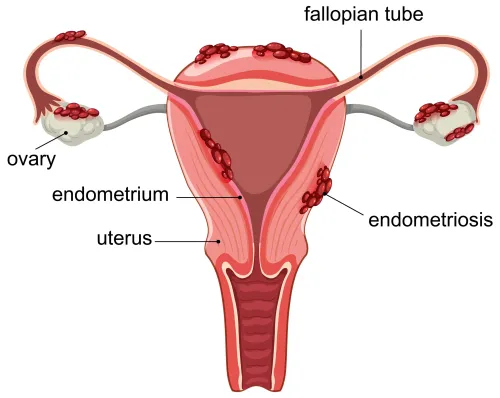
| Endometriosis involving the uterus | Laparoscopic excision in selected cases | Disease may also affect the bowel, bladder, ureters, ovaries or pelvic peritoneum |
| Selected early endometrial cancer | Minimally invasive hysterectomy | Gynecologic-oncology planning may include removal of both tubes and ovaries plus lymph-node assessment |
Adenomyosis is not a discrete fibroid, and uterus-preserving treatment has uncertain long-term fertility outcomes. Endometriosis surgery therefore needs broader planning than routine uterine surgery. When comparing laparoscopic surgery for uterine conditions Pune providers, confirm whether the proposal is hysteroscopic, laparoscopic, vaginal or open minimally invasive uterine surgery.
How the diagnosis determines the surgical route
A scan does not decide the route by itself. The surgeon combines pelvic ultrasound with your fertility history, menstrual symptoms, pregnancy plans and records from previous operations.
- Use saline infusion sonography to outline the uterine cavity when bleeding, a polyp or a submucosal fibroid is suspected.
- Use MRI to map fibroid size, number, depth and position, or to assess adenomyosis.
- Have hysteroscopy when cavity disease needs direct inspection or treatment.
- Review adhesions, prior incisions and complications before choosing abdominal access.
A fibroid projecting into the cavity is often better suited to hysteroscopic removal through the vagina and cervix. Selected intramural or subserosal fibroids may suit laparoscopic myomectomy, which removes fibroids while preserving the uterus; new fibroids can still develop.
A very large uterus, extensive fibroid burden, dense adhesions, severe endometriosis or difficult anatomy can make open abdominal surgery safer. Vaginal surgery is another route for selected hysterectomies.
The procedure name tells you what happens: laparoscopic hysterectomy removes the uterus through abdominal ports, repair of a bicornuate or septate uterus corrects a congenital shape abnormality, and laparoscopic cerclage places support around the cervix for selected pregnancy risks.
Hysterectomy definitively treats fibroids and adenomyosis, ends menstruation and prevents carrying a pregnancy; removing the ovaries is a separate decision.
Ask these questions before accepting a plan:
- Which imaging finding determines the route?
- How does preserving fertility change the operation?
- What would trigger conversion to open surgery?
Searches for uterine condition laparoscopy Pune or laparoscopic uterine surgery Pune should specify the proposed approach.
What to expect before, during and after the operation
Before booking minimally invasive uterine surgery, ask for a written plan covering preparation, the operation, discharge and recovery. The details matter more than a general promise of “keyhole surgery.”
1. Review blood thinners, diabetes medicines and supplements with the surgical and anaesthesia teams; do not stop any medicine independently. Confirm pregnancy status, arrange required blood tests, and review ultrasound or MRI images. Discuss bowel preparation if it has been prescribed.
2. Follow the fasting instructions exactly, including the time to stop food, milk and clear liquids. Ask how general anaesthesia will be managed, what pain relief you will receive, and whether same-day discharge or an overnight stay is planned.
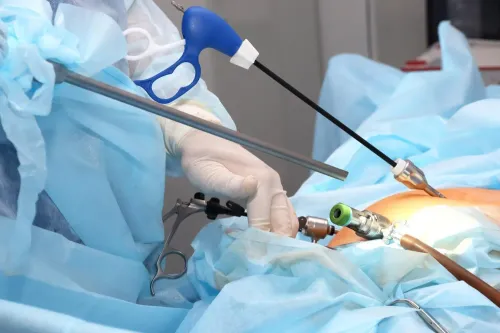
3. During laparoscopy, general anaesthesia keeps you asleep while carbon dioxide gently inflates the abdomen. The surgeon places a camera and instruments through several small abdominal incisions, then removes tissue through a port, the vagina or an enlarged incision, depending on the specimen and safety plan.
4. Afterward, the team monitors pain, bleeding, urination, nausea and walking before discharge. Obtain written instructions covering wound cleaning, showering, warning symptoms, driving restrictions, lifting limits, sexual-activity restrictions and the expected return-to-work date.
Recovery depends on the operation, blood loss and whether laparoscopy is converted to open surgery. Ask for a personalised timeline rather than relying on a generic rapid-recovery claim.
Which risks and tissue-removal decisions need discussion?
Smaller incisions do not guarantee a safer operation. Laparoscopy can mean less pain, a shorter stay and faster recovery, but bleeding, transfusion, infection, blood clots, anaesthetic complications and injury to the bowel, bladder, ureters or major blood vessels remain possible.
| Option | Main trade-off | Why it may be chosen |
|---|---|---|
| Planned laparoscopy | Smaller wounds, but limited port access | Safe visualisation and specimen removal are feasible |
| Open abdominal surgery | Larger incision and longer recovery | The uterus is very large, anatomy is difficult, or cancer surgery requires it |
| Conversion to open surgery | Recovery changes during the operation | Ports cannot provide secure visualisation or tissue removal |
Prior operations, adhesions, severe endometriosis, obesity, a high bleeding risk, a very large uterus or suspected cancer can make laparoscopy unsuitable. Conversion is a safety decision, not automatically a failed operation.
For laparoscopic surgery for uterine conditions in Pune, ask how the fibroid or uterus will leave the body. Power morcellation fragments tissue and can spread an unsuspected sarcoma; discuss intact vaginal removal, mini-laparotomy, contained morcellation when appropriate and enlarging the incision. No scan excludes every sarcoma.
If cancer is found, pathology and staging determine further treatment.
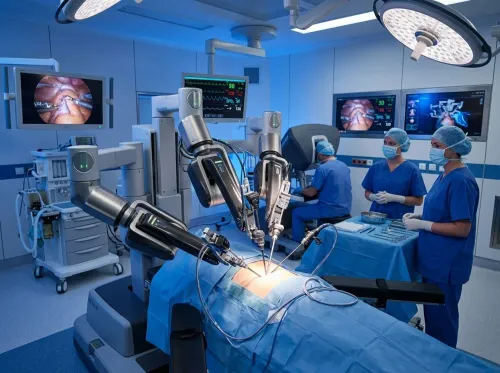
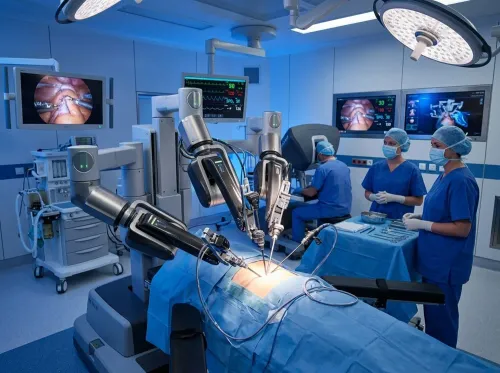
Robotic surgery is laparoscopy using articulated instruments, not a different treatment. Its ergonomic advantages do not prove superiority for every patient.
How to compare laparoscopic uterine surgery providers in Pune
A credible provider for laparoscopic uterine surgery Pune will name your exact diagnosis, describe the uterine imaging findings and explain why the proposed route fits your anatomy. Ask whether the operation is laparoscopic, hysteroscopic, vaginal or open, and what findings would change that plan.
Use this comparison checklist:
- Ask for expected blood loss, the transfusion arrangement and the likelihood of conversion to an open operation.
- Confirm how the specimen will leave the body: through the vagina, an enlarged incision, intact removal or contained morcellation.
- Ask who reviews the pathology and when you will receive the report.
- Discuss whether surgery could affect menstruation, fertility or your ability to carry a pregnancy.
- For endometriosis or cancer, identify who will manage bowel, bladder, ureter or lymph-node work, and whether a multidisciplinary team is available.
| Provider detail | What to verify | Why it matters |
|---|---|---|
| Route | Laparoscopic, hysteroscopic, vaginal or open | The wrong access route can miss cavity disease or make removal unsafe |
| Hospital readiness | Hemorrhage control, anaesthetic support and unplanned open surgery | Complications need immediate treatment, not transfer delays |
| Specialist planning | Relevant imaging, prior operations and fertility goals reviewed | Adhesions, fibroid burden and anatomy change the safest plan |
For uterine condition laparoscopy Pune, compare the hospital as carefully as the surgeon. Dr.Kunaal Shinde- Gynaec Laparoscopic Surgeon Pune can provide a consultation focused on complex cases; bring scan reports, operation notes, medication lists and fertility goals so the route is judged on your individual anatomy.
Related services
Gynaec Laparoscopic Surgery Gynecologic laparoscopic surgery is a minimally invasive procedure that allows a surgeon to diagnose and treat gynecological conditions. View service → |
Laparoscopy Surgery Diagnostic Hystero Laparoscopy Lap Surgery for Endometrisis Lap Surgery for Ectopic Pregnancy Lap Surgery for uterine Anomalies Lap Cerclage... View service → |
Frequently asked questions
Which uterine conditions can laparoscopy treat?
Laparoscopy can treat selected fibroids, adenomyosis, uterine anomalies, endometriosis involving the uterus and some early uterine cancers. Suitability depends on the condition’s size, location, depth, symptoms, fertility plans and previous operations.
How does diagnosis determine the surgical route?
Ultrasound, MRI, examination, symptoms and cancer assessment help identify the condition and its extent. These findings guide the choice between laparoscopy, robotic surgery, hysteroscopy, vaginal surgery or open abdominal surgery.
What should I expect before, during and after laparoscopic uterine surgery?
Expect a review of imaging, medicines, medical history and fertility goals before surgery. During the operation, the surgeon uses small abdominal incisions and a camera under general anaesthesia. Recovery includes pain control, walking, wound care and follow-up instructions.
Which risks and tissue-removal decisions need discussion?
Discuss bleeding, infection, injury to the bladder, bowel or ureters, blood clots, anaesthesia risks, conversion to open surgery and recurrence. Ask how the surgeon will remove tissue, whether contained extraction is planned and how fertility or cancer concerns affect that decision.
How can I compare laparoscopic uterine surgery providers in Pune?
Compare training and experience with your specific condition, hospital facilities, emergency support, complication and conversion policies, tissue-removal methods, fertility counselling and postoperative follow-up.
Related service
Fertility Enhancing Endoscopic Surgeries Fertility Enhancing Endoscopic Surgeries Fertility enhancing endoscopic surgery is a minimally invasive procedure that can help diagnose and treat infertility issues. View service → |