
Pelvic pain does not automatically call for an operation: sudden severe pain, fainting, fever, heavy bleeding or a positive pregnancy test need urgent assessment first. You will learn how doctors investigate less urgent pain, what laparoscopy can reveal, when treatment during the same anaesthetic makes sense and how to compare surgical care in Pune.
Key takeaways
- Seek emergency care for severe one-sided pain, fainting, fever, or pain with a positive pregnancy test.
- Ask what the laparoscopy will examine and which treatments could happen during the same operation.
- A normal laparoscopy rules out some causes but does not explain every type of pelvic pain.
- Compare surgeons by experience, hospital support, consent details, and follow-up arrangements.
When pelvic pain needs urgent assessment or a planned laparoscopy
Sudden severe or one-sided pelvic pain needs urgent assessment, not a routine booking. Fainting, marked dizziness, fever, heavy vaginal bleeding, persistent vomiting, shoulder-tip pain, or a positive pregnancy test with pain or bleeding can signal ectopic pregnancy, ovarian torsion, rupture, infection or internal bleeding. Go to emergency care promptly.
Persistent or recurring pain usually follows a stepwise assessment before laparoscopy:
- Ask when pain starts, how it relates to periods, sex, bowel movements and urination.
- Perform a pelvic examination and pregnancy test when relevant.
- Check urine, infection markers and a complete blood count when indicated.
- Perform a transvaginal ultrasound.
- Add MRI when deep endometriosis is suspected or an ultrasound finding remains unclear.
A normal ultrasound does not exclude superficial endometriosis. Laparoscopy becomes reasonable when pain remains disabling, non-surgical tests are inconclusive, empirical treatment is unsuitable or unsuccessful, or direct inspection would change treatment.
| Situation | Usual next step | Reason |
|---|---|---|
| Urgent warning signs | Emergency evaluation | Excludes ectopic pregnancy, torsion, rupture, infection or bleeding |
| Persistent pain with unclear findings | Specialist discussion about diagnostic laparoscopy | Direct inspection may identify endometriosis, adhesions, hydrosalpinx or a visible mass |
| Pain pattern suggesting bowel, bladder, pelvic-floor, nerve or musculoskeletal disease | Parallel non-surgical evaluation | An abdominal operation may not address the source |
If you are comparing laparoscopy for pelvic pain Pune or diagnostic laparoscopy pelvic pain Pune, judge the need from this clinical sequence, not from the procedure’s availability.
What pelvic-pain laparoscopy examines—and what other procedures examine
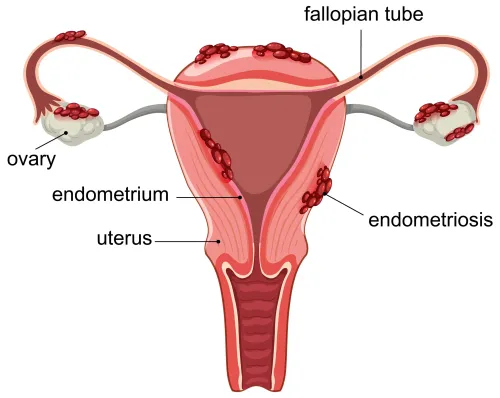
Pelvic pain laparoscopic diagnosis inspects the abdominal and pelvic cavity under general anaesthesia. A camera examines the uterus, ovaries, fallopian tubes, pelvic peritoneum, and visible surfaces of the bowel and bladder. It can investigate endometriosis, pelvic adhesions, ovarian cyst complications, hydrosalpinx, chronic pelvic infection, tubal abnormalities, visible masses, and findings missed by ultrasound.
A normal ultrasound does not exclude superficial peritoneal endometriosis. A visible lesion still may need biopsy and histology because appearance alone does not prove the diagnosis.
| Procedure | What it examines | What it answers |
|---|---|---|
| Diagnostic laparoscopy | Outside of the uterus, tubes, ovaries, peritoneum, and visible organ surfaces | What disease is visible and whether a sample is needed |
| Operative laparoscopy | The same areas during the same operation | Whether identified disease can be treated immediately |
| Hysteroscopy | Inside the uterus, through the cervix | Whether the uterine cavity contains polyps, fibroids, adhesions, or other abnormalities |
| Dye testing | Dye passed through the cervix and fallopian tubes | Whether dye spills through the tubes, answering a fertility question |
Diagnostic laparoscopy primarily inspects and samples; operative laparoscopy treats during that anaesthetic. Hysteroscopy does not inspect the outside of the uterus, tubes, or ovaries. Dye testing helps assess tubal patency, but it does not explain every cause of pelvic pain. The phrase gynecological laparoscopy Pune describes a location-specific search, not a separate operation.
What happens during the operation and what you are consenting to
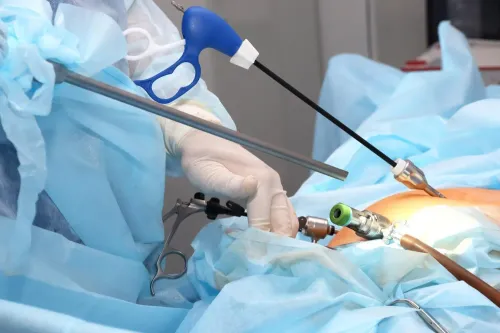
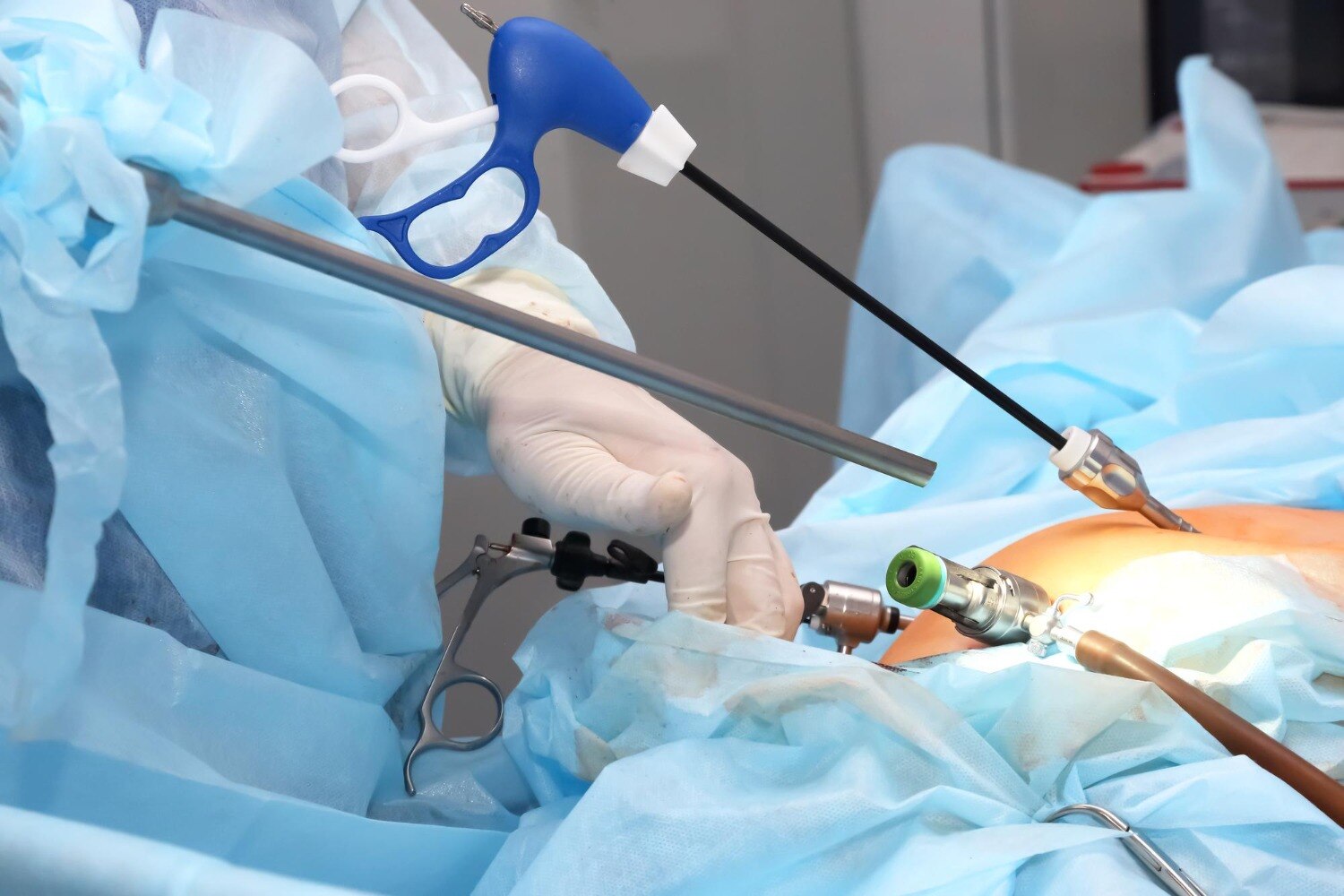
Under general anaesthesia, the surgeon makes a small abdominal entry and fills the pelvis with carbon dioxide so the organs separate for viewing. A camera then examines the uterus, ovaries, tubes, pelvic lining and visible bowel or bladder surfaces; extra small incisions allow instruments, biopsy forceps or dye testing through the cervix.
| Stage | What happens | What it means for consent |
|---|---|---|
| Inspection | The camera looks for endometriosis, cysts, adhesions or tubal disease | Ask whether photographs and biopsies will be taken |
| Same-session treatment | Instruments may excise or ablate endometriosis, treat an ovarian cyst, divide selected adhesions or manage a tubal problem | Confirm exactly which treatments are authorised |
| Recovery | Many patients go home the same day; extensive treatment or slower recovery may require an overnight stay | Ask who decides admission and who provides urgent help |
Before booking a diagnostic laparoscopy pelvic pain Pune patients should ask:
- What diagnosis is the pelvic pain laparoscopic diagnosis testing?
- What happens if the pelvis looks normal?
- Will treatment occur during the same anaesthetic?
- Could extensive disease require another operation or a colorectal, urology or other specialist?
- What are the risks of bleeding, infection, anaesthetic complications, bowel, bladder, ureter or major-vessel injury, entry injury and conversion to open surgery?
Prior abdominal surgery, obesity, adhesions and a large mass change entry and instrument planning. Adhesions do not prove the cause of pain; routine adhesiolysis for pain alone has uncertain long-term benefit and can create bleeding, organ injury or new adhesions.
Before removing an endometrioma, discuss reduced ovarian reserve and possible fertility effects, since cystectomy can damage healthy ovarian tissue.
How to interpret a normal or positive finding after laparoscopy
A visible finding does not automatically explain every symptom. Endometriosis, a cyst, hydrosalpinx or adhesions may contribute to pain without causing all of it.
In pelvic pain laparoscopic diagnosis, photographs document appearance, while biopsy and histological review strengthen an uncertain endometriosis diagnosis; a negative sample does not completely exclude disease if the lesion was missed or inadequately sampled.
| Result | What it supports | What it cannot prove |
|---|---|---|
| Normal pelvis | No visible abdominal or pelvic abnormality | That pain is imaginary, psychological or finished |
| Endometriosis, cyst, hydrosalpinx or adhesions | A possible structural contributor | That the finding caused every symptom |
| Negative biopsy | No disease in the tissue sampled | That endometriosis is absent everywhere |
A normal pelvis is useful information, not a reason to stop investigating persistent symptoms. Continue assessment for pelvic-floor muscle dysfunction, bladder pain, irritable bowel syndrome or other bowel disease, nerve or abdominal-wall pain, spine-related pain, painful sex, sleep disruption, mood effects and central pain sensitisation.
Removing visible disease helps some patients, but chronic pelvic pain is often multifactorial, so pain can persist. Your post-operative plan should identify who reviews the pathology, when symptoms will be reassessed, which non-surgical treatments are available and what happens if pain remains.
That plan matters whether you are considering laparoscopy for pelvic pain in Pune or elsewhere: laparoscopy is an invasive diagnostic test, not a guarantee of one explanation or a cure.
How to compare pelvic-pain laparoscopy providers in Pune
Choose a surgeon’s experience with the suspected condition, not simply the availability of laparoscopy or a robot. For laparoscopy for pelvic pain Pune, ask these questions before booking:
| Provider question | What to verify | Why it matters |
|---|---|---|
| Diagnostic and operative scope | Performs diagnostic, operative and complex endometriosis procedures | A planned inspection may require treatment during the same anaesthetic |
| Tissue diagnosis | Biopsy is considered and pathology reports are accessible to you | Visual appearance alone does not prove endometriosis or cancer |
| Consent and referrals | Treatment limits are recorded; colorectal, urology or oncology referral is available | Disease involving bowel, bladder or cancer pathways may exceed one surgeon’s scope |
For gynecological laparoscopy Pune, check the facility as carefully as the surgeon. Confirm anaesthesia support, recovery monitoring, overnight capability, emergency transfer or admission arrangements, a blood-transfusion pathway, infection-control procedures and access to the final pathology report. Ask who answers urgent questions after discharge and how follow-up addresses persistent pain if surgery does not resolve it.
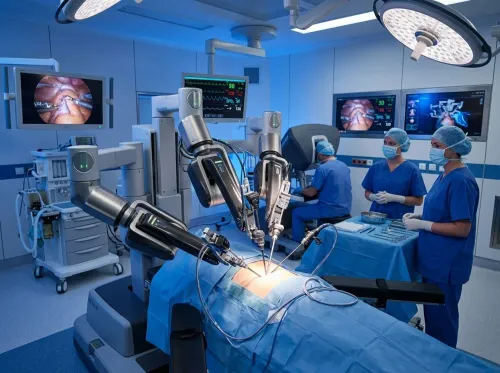
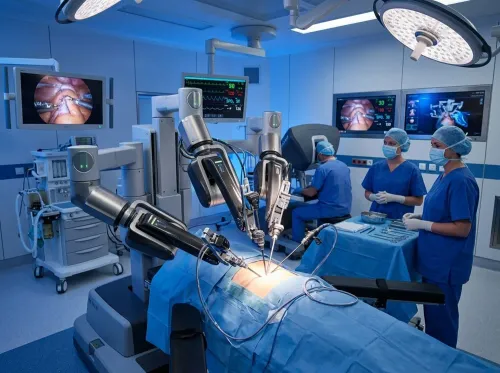
Robotic surgery provides articulated instruments and three-dimensional vision, but it does not remove bleeding, infection, organ-injury or anaesthetic risks, and it cannot guarantee a diagnosis.
Dr.Kunaal Shinde- Gynaec Laparoscopic Surgeon Pune is relevant to discuss when your evaluation suggests advanced gynecological laparoscopic or oncology care; still compare the diagnosis, alternatives, consent limits, facility and follow-up plan.
Related services
Laparoscopy Surgery Diagnostic Hystero Laparoscopy Lap Surgery for Endometrisis Lap Surgery for Ectopic Pregnancy Lap Surgery for uterine Anomalies Lap Cerclage... View service → |
Gynaec Laparoscopic Surgery Gynecologic laparoscopic surgery is a minimally invasive procedure that allows a surgeon to diagnose and treat gynecological conditions. View service → |
Frequently asked questions
When does pelvic pain require emergency assessment instead of planned laparoscopy?
Sudden severe or one-sided pain, fainting, marked dizziness, fever, heavy vaginal bleeding, persistent vomiting, shoulder-tip pain, or a positive pregnancy test with pain or bleeding requires prompt emergency assessment. These symptoms can indicate ectopic pregnancy, ovarian torsion, rupture, infection, or internal bleeding.
What does a diagnostic laparoscopy examine for pelvic pain?
A surgeon uses a camera through small abdominal incisions to inspect the uterus, ovaries, fallopian tubes, pelvic lining, and surrounding structures. The procedure can identify conditions such as endometriosis, adhesions, ovarian cysts, pelvic infection, or internal bleeding. Ultrasound, MRI, hysteroscopy, and colon or bladder examinations assess different structures and cannot replace every part of laparoscopy.
What should you ask before consenting to pelvic-pain laparoscopy?
Ask what the operation is intended to find, whether the surgeon will treat endometriosis, adhesions, cysts, or other findings during the same procedure, and what additional consent is required. Discuss anaesthesia, possible conversion to a larger incision, complications, recovery time, and follow-up.
What does a normal laparoscopy mean if pelvic pain continues?
A normal result makes visible endometriosis, adhesions, cysts, torsion, and some structural causes less likely, but it does not exclude nerve pain, pelvic-floor dysfunction, bladder or bowel disorders, or pain-processing conditions. Arrange follow-up to review the findings and plan further assessment.