
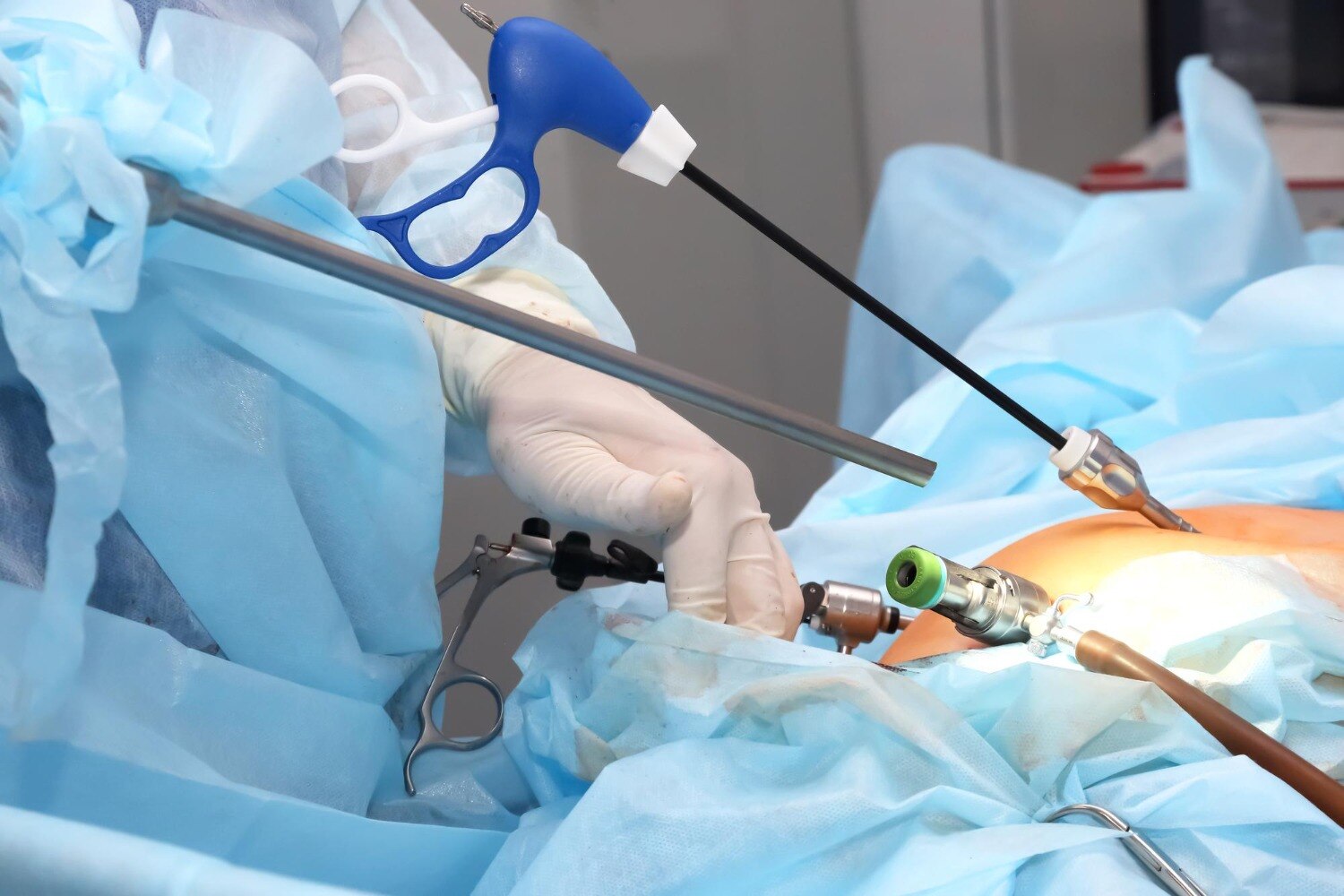
Laparoscopy can treat several conditions affecting the ovaries, fallopian tubes, uterus and pelvic structures, but the safest operation depends on the diagnosis, fertility plans, mass size and cancer risk. By the end, you will know which conditions may suit keyhole surgery, which alternatives deserve comparison and what to ask before choosing a surgical route.
Key takeaways
- Laparoscopy can treat selected cysts, endometriosis, fibroids, adhesions and tubal disease.
- Ultrasound findings, symptoms, fertility goals and menopause status guide the surgical route.
- Diagnostic laparoscopy identifies pelvic disease; operative laparoscopy treats suitable findings immediately.
- Ask about alternatives, ovarian tissue preservation, complications, conversion to open surgery and recovery time.
Which ovarian, uterine and tubal conditions can laparoscopy treat?
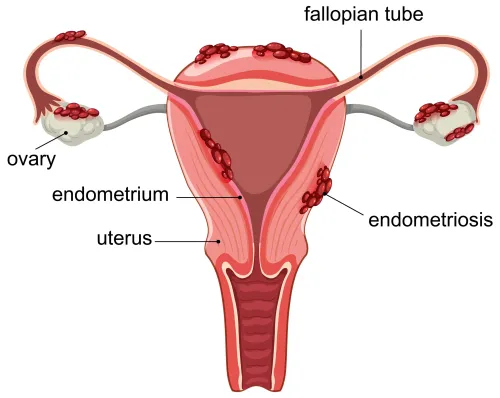
Selected benign ovarian cysts can be removed by laparoscopic cystectomy, including some dermoid cysts, while preserving healthy ovarian tissue when feasible. Ultrasound appearance, size, symptoms, menopausal status and fertility goals determine whether observation, laparoscopy or open surgery is safer. Laparoscopy can also excise or ablate endometriosis and remove endometriomas.
An ectopic pregnancy may require laparoscopic salpingectomy, removing the affected tube, or salpingotomy, opening the tube to remove the pregnancy. Major internal bleeding or circulatory instability requires emergency open surgery. Laparoscopic myomectomy removes selected fibroids while retaining the uterus; number, size and location determine whether the operation is practical.
| Condition or route | Main purpose | Important limit or alternative |
|---|---|---|
| Hysteroscopic removal | Treats fibroids projecting into the uterine cavity | Does not treat outer-wall fibroids |
| Uterine artery embolisation | Non-surgical treatment for selected fibroids | Suitability depends on symptoms and fertility plans |
| Laparoscopic hysterectomy | Treats symptomatic fibroids, adenomyosis or persistent abnormal bleeding | Removes the uterus and ends the ability to carry a pregnancy |
Hysterectomy may also treat selected early cancers; ovary removal is a separate decision. A complex, very large or suspicious ovarian mass needs a gynecologic-oncology plan, because suspected cancer changes the goal from simply removing a mass to preventing rupture and completing staging.
Laparoscopic surgery for women is not automatically suitable when safe specimen removal or cancer control cannot be achieved.
Can laparoscopy help infertility, tubal disease, pelvic pain and prolapse?
Laparoscopy is not a routine first-line infertility test. Doctors consider it when less-invasive fertility assessment points to tubal disease, endometriosis, adhesions, or an ovarian, tubal or uterine abnormality.
- Adhesions from previous surgery, pelvic infection or endometriosis can sometimes be divided with adhesiolysis.
- A blocked tube may need repair, removal, or salpingectomy when it is badly damaged.
- A hydrosalpinx can reduce IVF success; removing or disconnecting it may help before treatment.
- Selected uterine anomalies can be corrected laparoscopically.
- Severe tubal damage often makes in-vitro fertilisation more effective than reconstruction, and tubal surgery can increase the risk of another ectopic pregnancy.
Laparoscopy adds value when pain, examination findings, ultrasound or MRI results, endometriosis history, or previous operations suggest a treatable pelvic cause. Cutting adhesions is not a guaranteed cure and can cause bleeding, organ injury or new adhesions.
A normal-looking pelvis does not prove that pain has no physical cause; pelvic-floor pain, bladder or bowel disease, nerve pain and non-visible endometriosis need separate assessment.
For selected apical pelvic organ prolapse, laparoscopic sacrocolpopexy attaches the vagina or cervix to supportive tissue. Vaginal repairs, pelvic-floor physiotherapy, pessaries and other non-surgical treatments suit different prolapse patterns.
These are among the conditions treated with laparoscopy. If you are comparing gynecological laparoscopy Pune options, ask which finding justifies surgery and whether observation, medication or assisted reproduction offers a safer route.
How do doctors decide between diagnostic laparoscopy, operative laparoscopy and other routes?
Diagnostic laparoscopy answers “What is happening on the outer pelvic surfaces?” It allows inspection and biopsy; operative laparoscopy adds excision, cauterisation, suturing, adhesiolysis, cyst removal or organ removal during the same operation.
| Route | What it examines or treats | When it fits |
|---|---|---|
| Diagnostic laparoscopy | Ovaries, tubes, peritoneum and outer uterus | Unexplained pain, suspected endometriosis or tubal disease |
| Operative laparoscopy | Pelvic disease through abdominal ports | Treatable cysts, adhesions, endometriosis, ectopic pregnancy or selected prolapse |
| Hysteroscopy | The uterine cavity through the vagina and cervix | Endometrial polyps, submucosal fibroids and some uterine septa |
| Laparotomy | The abdomen through a larger incision | Major bleeding, very large masses, dense adhesions or extensive cancer |
Hysteroscopy cannot inspect the ovaries or outer pelvic surfaces. Laparotomy may be safer when minimally invasive access cannot control bleeding or safely remove a mass.
Findings that commonly prompt a recommendation include:
- Persistent or severe pelvic pain
- An enlarging ovarian cyst or abnormal ultrasound or MRI features
- Infertility with suspected tubal disease or endometriosis
- Recurrent abnormal bleeding
- Prolapse examination showing apical support failure
Before surgery, screening covers a pregnancy test, previous abdominal operations, anaesthesia and cardiopulmonary risk, blood-thinner use, obesity-related access difficulty and suspected malignancy. A normal pelvis does not prove that pain has no physical cause; pelvic-floor, bladder, bowel, nerve and non-visible endometriosis conditions need separate assessment.
These distinctions matter when comparing what conditions can gynecological laparoscopy for treat Pune searches with gynecological laparoscopy Pune options.
What happens during laparoscopic surgery, and when is it not the safest choice?
1. Before laparoscopic surgery for women, the team reviews your symptoms, examination, ultrasound or MRI, previous operations, allergies, medical conditions and fertility plans.
Blood tests assess haemoglobin and other factors; perform a pregnancy test when relevant, follow instructions for blood thinners and diabetes medicines, and stop eating and drinking for the fasting period advised before general anaesthesia.
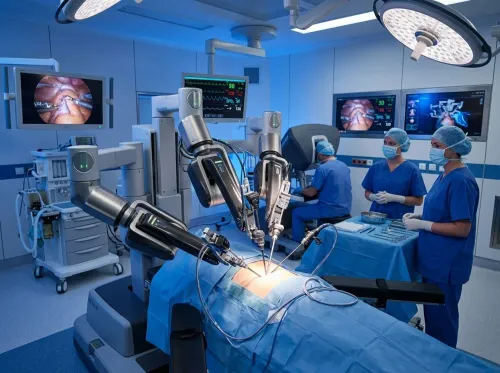
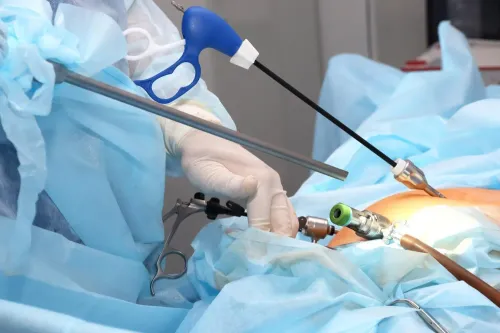
2. After anaesthesia, carbon dioxide inflates the abdomen to create working space. The surgeon inserts a camera through one small incision and instruments through additional ports.
3. The surgeon inspects the pelvis, then performs the planned treatment: excision, cauterisation, suturing, adhesiolysis, cyst removal, salpingectomy or organ removal. Removed tissue goes to a pathology laboratory; the report confirms conditions such as endometriosis, fibroids or cancer.
Small incisions do not guarantee a short recovery. Risks include bleeding, infection, bowel or bladder injury, anaesthetic complications, blood clots, new adhesions and conversion to open surgery.
The plan can change when dense adhesions hide anatomy, bleeding cannot be controlled, a mass is too large to remove safely, cancer appears advanced, carbon dioxide is unsafe for severe cardiopulmonary disease, or abdominal access is hazardous.
Power morcellation during fibroid surgery can spread an unsuspected sarcoma. Discuss patient selection, alternatives, contained morcellation or mini-laparotomy, and consent before choosing it.
Medication, observation, assisted reproduction, uterine artery embolisation, hysteroscopy or open surgery may provide a safer balance for your diagnosis.
What should you ask a Pune surgeon before choosing gynecological laparoscopy?
A safe consultation with a gynaec laparoscopic surgeon in Pune should identify the operation’s purpose, not merely describe it as “keyhole surgery.” Ask what exact condition the procedure will treat and what your ultrasound or MRI shows.
Ask these questions:
- Is observation or medication reasonable, or would hysteroscopy, embolisation, assisted reproduction or open surgery fit better?
- Will the plan preserve fertility? Will both ovaries and fallopian tubes remain?
- If I have a hydrosalpinx or fibroid, will you repair, remove or monitor it?
- Are you proposing removal of the uterus or either ovary?
- For suspected cancer, will a gynecologic-oncology team lead staging, and how will you prevent tumour rupture?
- How many operations like this exact procedure have you performed?
- How will you manage blood thinners, previous abdominal operations and anaesthesia concerns?
- Will removed tissue undergo pathology, and what happens if you need to convert to laparotomy?
- What recovery time and warning signs after discharge should I expect?
| Option | What it means | When it applies |
|---|---|---|
| Observation or medication | Treats or monitors without surgery | Stable symptoms, suitable fibroids or cysts |
| Hysteroscopy | Enters through the vagina to treat cavity disease | Polyps or submucosal fibroids |
| Embolisation | Blocks blood supply to selected fibroids | When fertility plans and anatomy permit |
| Assisted reproduction | Bypasses damaged tubes | Severe tubal disease or hydrosalpinx |
| Open surgery | Uses a larger abdominal incision | Very large masses, dense adhesions or cancer |
For someone comparing gynecological laparoscopy Pune options, Dr.Kunaal Shinde- Gynaec Laparoscopic Surgeon Pune is relevant only if the consultation links the route to your diagnosis, fertility goals, cancer risk and alternatives.
Related services
Gynaec Laparoscopic Surgery Gynecologic laparoscopic surgery is a minimally invasive procedure that allows a surgeon to diagnose and treat gynecological conditions. View service → |
Laparoscopy Surgery Diagnostic Hystero Laparoscopy Lap Surgery for Endometrisis Lap Surgery for Ectopic Pregnancy Lap Surgery for uterine Anomalies Lap Cerclage... View service → |
Frequently asked questions
Which ovarian, uterine and tubal conditions can gynecological laparoscopy treat?
Laparoscopy can remove selected ovarian cysts, including some dermoid cysts and endometriomas, while preserving healthy ovarian tissue when feasible. It can also treat endometriosis, pelvic adhesions, some fibroids and selected tubal conditions. Ultrasound appearance, cyst size, symptoms, menopausal status and fertility plans determine whether laparoscopy is appropriate.
Can laparoscopy help infertility, tubal disease, pelvic pain and prolapse?
It can identify and treat causes such as endometriosis, adhesions, ovarian cysts and some tubal blockages. It does not improve every type of infertility, and pelvic organ prolapse often requires a different repair approach. Your evaluation should match the operation to the diagnosed cause.
How do doctors choose between diagnostic and operative laparoscopy?
Diagnostic laparoscopy is used when examination and imaging do not explain symptoms or fertility problems. Operative laparoscopy combines inspection with treatment, such as cyst removal, endometriosis excision or adhesion release. Doctors may recommend medication, hysteroscopy, vaginal surgery, open surgery or another route when it offers better safety or results.
When is gynecological laparoscopy not the safest choice?
Open surgery may be safer for very large or suspicious masses, extensive disease, severe adhesions, major bleeding risk or situations requiring wider access. The final choice also depends on previous operations, medical conditions, anaesthesia risk, pregnancy status and the surgeon’s assessment.
What should you ask a Pune surgeon before laparoscopic surgery?
Ask what diagnosis the operation addresses, which route is recommended and why, whether ovarian tissue can be preserved, what alternatives exist, whether conversion to open surgery is possible, expected recovery time, complications, fertility implications and follow-up requirements.
Related service
Fertility Enhancing Endoscopic Surgeries Fertility Enhancing Endoscopic Surgeries Fertility enhancing endoscopic surgery is a minimally invasive procedure that can help diagnose and treat infertility issues. View service → |