
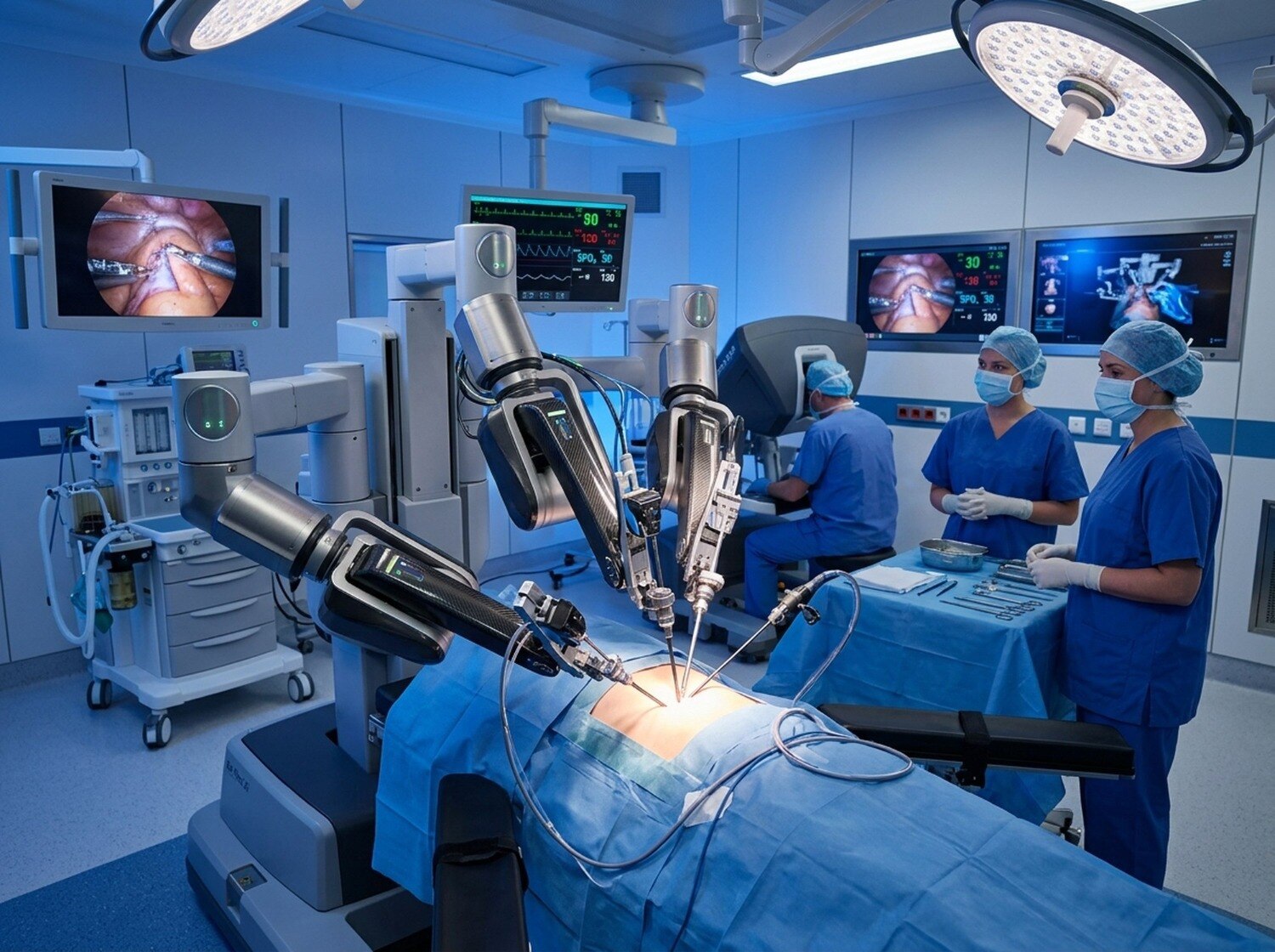
Robotic surgery is recommended only when it can remove and stage the cancer as safely and completely as another approach. By the end, you will know which cancer stages and operations are suitable, when open surgery is safer, and which questions to ask a Pune gynecologic-oncology team before consenting.
Key takeaways
- Robotic surgery suits selected cancers confined to the uterus or a defined pelvic site.
- Complete tumour removal, clear margins and lymph-node assessment matter more than the surgical robot.
- Open surgery may be safer for extensive disease, large tumours or difficult anatomy.
- Ask how scans, biopsy results and anaesthesia findings change the recommended approach.
When cancer stage and tumour features make robotic surgery suitable
Robotic surgery is most often considered for apparent early-stage cancer confined to the uterus or a selected pelvic site. The operation must allow complete tumour removal, clear margins and appropriate lymph-node assessment; a robot is not a substitute for any of these cancer goals.
The practical gynecologic oncology surgery indications depend on the cancer type, tumour size and location, suspected spread beyond the uterus, previous operations, adhesions, medical fitness and whether staging or later chemotherapy or radiotherapy is needed.
A small, localised uterine tumour may fit robotic access, while a large mass, difficult location or dense adhesions can make open surgery safer.
Robotic surgery is not the default for advanced or metastatic cancer. When disease covers the peritoneum or involves major structures, the priority becomes complete cytoreduction or wider en-bloc removal, which may require open access.
| Finding | What it supports | What can change the plan |
|---|---|---|
| Apparent early-stage uterine cancer | Robotic hysterectomy with staging when complete removal is feasible | Large tumour, extrauterine spread or inadequate nodal access |
| Selected pelvic-site cancer | Minimally invasive staging or treatment | Adhesions, prior operations or difficult anatomy |
| Advanced or metastatic disease | Cytoreductive planning | Open surgery for broader tumour removal |
So, when is robotic gynecologic cancer surgery for recommended pune? In Pune, it is recommended only after a gynecologic-oncology review confirms that the robotic route supports the complete cancer operation—not simply because a robot is available.
Which gynecologic cancer operations may be performed robotically
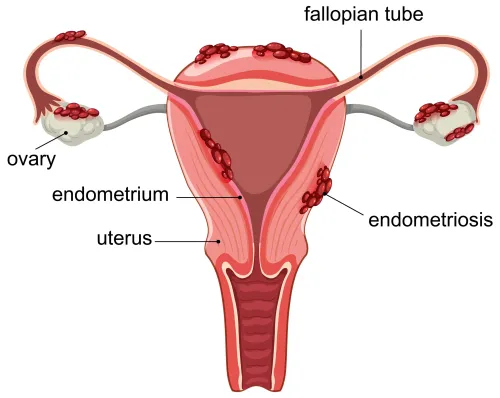
For apparent early-stage endometrial or uterine cancer, the usual robotic operation is a total hysterectomy with removal of both fallopian tubes and ovaries. The surgeon may add sentinel-node mapping, pelvic lymph-node assessment, or, in selected higher-risk cases, para-aortic lymph-node assessment.
| Operation | What is performed | When it may apply |
|---|---|---|
| Robotic uterine cancer surgery | Hysterectomy, both tubes and ovaries removed, with indicated node assessment | Apparent disease confined to the uterus |
| Robotic ovarian or fallopian-tube staging | Removal of the involved structures, washings, biopsies and lymph-node assessment | Carefully selected early-stage disease |
| Diagnostic surgery for an indeterminate mass | Inspection and tissue diagnosis while avoiding tumour rupture | When imaging cannot establish whether a mass is cancer |
| Interval or limited surgery | Targeted assessment or removal of remaining disease after chemotherapy | Only when the team can still assess and remove disease adequately |
A suspicious ovarian mass does not automatically qualify for robotic surgery. If rupture could spill cancer cells, or scans suggest disseminated disease, the operation must be planned around safe removal and complete staging; open surgery may be better.
Robotic onco surgery for cervical cancer requires a sharper distinction. Robotic simple hysterectomy is different from robotic radical hysterectomy, which removes surrounding tissues and part of the upper vagina.
The LACC trial found worse survival and more recurrence after minimally invasive radical hysterectomy than after open surgery, so open radical hysterectomy is generally preferred when radical surgery is needed, especially for larger tumours. A Pune consultation for robotic gynecologic cancer surgery should therefore focus on the exact operation, not the robot.
When open surgery or conventional laparoscopy is the safer choice
Open surgery or conventional laparoscopy is safer when tumour size, spread, adhesions or the required cancer operation exceed the limits of robotic access. These are core gynecologic oncology surgery indications, not failures of minimally invasive treatment.
| Route | Incisions and access | Practical strengths and limits |
|---|---|---|
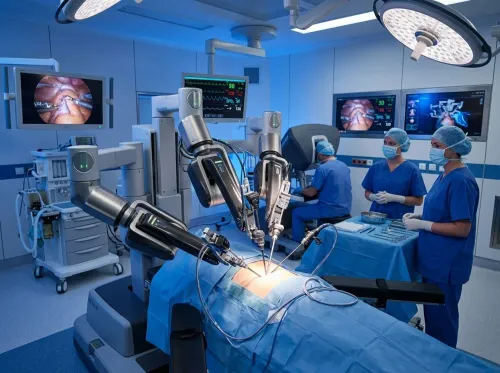
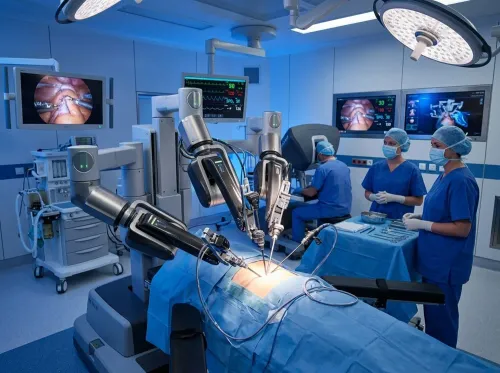
| Robotic surgery | Several small abdominal incisions; pneumoperitoneum and steep Trendelenburg | Precise instrument control, less wound pain, blood loss and hospital time; requires specialised instruments and suitable cardiopulmonary fitness |
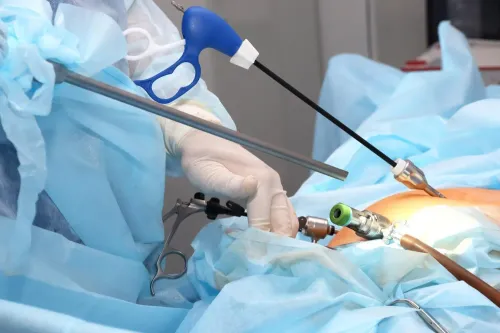
| Conventional laparoscopy | Several small abdominal incisions; the surgeon operates through straight instruments | Similar recovery advantages; less instrument articulation and reach than robotics |
| Open surgery | One larger abdominal incision | Direct, wide access for bulky or widely spread disease; more wound pain, blood loss and recovery time |
Open access is often safer for very large tumours, extensive peritoneal disease, major blood-vessel involvement, dense adhesions or broad en-bloc removal. Advanced ovarian, fallopian-tube and primary peritoneal cancers commonly need open debulking when the goal is no visible residual disease, usually alongside platinum-based chemotherapy; small incisions are not the treatment goal.
Robotic surgery still carries serious risks:
- Bowel, bladder, ureteral or vascular injury
- Bleeding, infection and thromboembolism
- Cardiopulmonary strain from pneumoperitoneum, steep Trendelenburg and prolonged positioning
If safe dissection or complete tumour removal becomes unlikely, converting from robotic to open surgery protects the patient and the cancer outcome. It is a safety decision, not automatically a complication.
How scans, pathology and anaesthesia assessment determine the approach
The approach is decided by cancer biology and surgical safety, not by robot availability. The team first reviews the biopsy report, pelvic examination and pelvic imaging, then confirms the gynecologic oncology surgery indications.
1. CT or MRI assesses tumour size, local invasion, lymph nodes, peritoneal disease and distant spread. If an office examination cannot show cervical or vaginal involvement clearly, an examination under anaesthesia may provide the missing detail.
2. The surgeon and anaesthetist assess fitness for pneumoperitoneum and prolonged steep Trendelenburg positioning. They also review cardiopulmonary disease, previous operations, adhesions, body positioning, anaemia and the likely need for chemotherapy or radiotherapy.
3. A multidisciplinary review is important when staging, radiation, chemotherapy or extensive cytoreduction may be required. The group may recommend robotic, conventional laparoscopic or open surgery after comparing access, safety and the complete cancer plan.
4. The oncologic test is the same for every route: can the operation remove all visible tumour where appropriate, obtain adequate margins, assess the correct lymph-node stations and provide complete pathology? If not, smaller incisions do not justify the approach.
The robot is an instrument platform, not a cancer treatment. It does not replace pathology, lymph-node assessment, margin control, chemotherapy, radiotherapy or follow-up, and it is not inherently more cancer-curing than open surgery.
If pneumoperitoneum or steep positioning is unsafe, adhesions prevent access, or disease requires broad removal, open surgery may provide the safer, more complete operation.
What to ask a Pune cancer surgeon before choosing robotic surgery
A useful consultation does more than confirm that a robot is available. Ask these questions:
- Is the operator a trained gynecologic oncologist, and how often does the team perform this operation?
- What exact operation is planned: hysterectomy, removal of both tubes and ovaries, sentinel-node mapping, pelvic-node dissection, para-aortic-node assessment, or another procedure?
- What do the biopsy, pelvic examination, CT or MRI show about tumour type, location and stage?
- Why is robotic surgery preferable to conventional laparoscopy or open surgery for this tumour? What evidence supports it for this cancer and stage?
- How will you prevent incomplete staging, positive margins or tumour rupture, especially if an ovarian or tubal mass is present?
- What hospital stay, activity restrictions, anaesthesia concerns, conversion-to-open risk and major risks—such as bleeding, infection, bowel, bladder, ureteral or vascular injury, and clots—should you expect?
- What is the open-surgery alternative, and how would its cancer results compare?
| Route | Practical advantage | Important limitation |
|---|---|---|
| Robotic | Precise instruments through small incisions | Platform, instrument and operating-time costs |
| Conventional laparoscopy | Small incisions without robotic-platform costs | Less instrument flexibility for complex dissection |
| Open surgery | Broad access for extensive disease | Larger incision, more pain and longer recovery |
Ask for the complete estimate, including platform, instruments and operating time; the less expensive or more available route is reasonable when oncologic results are equivalent. Dr.Kunaal Shinde- Gynaec Laparoscopic Surgeon Pune is one consultation option, but specialist expertise, case suitability and a complete cancer plan matter more than the robot.
Related service
Gynaec Onco Surgery Cervical Cancer Ovarian Cancer Uterine Cancer Fallopian Tube Cancer Vulvar Cancer View service → |
Frequently asked questions
When is robotic gynecologic cancer surgery recommended?
It is considered mainly for selected apparent early-stage cancers confined to the uterus or a defined pelvic site, when the surgeon can remove the tumour completely and assess lymph nodes appropriately.
Which gynecologic cancer operations may be performed robotically?
Depending on the cancer and its extent, robotic surgery may be used for hysterectomy, removal of ovaries and fallopian tubes, pelvic or para-aortic lymph-node assessment, and selected staging procedures.
When is open surgery or conventional laparoscopy safer?
Open surgery may be safer for extensive spread, very large tumours, major involvement of nearby organs, dense adhesions or anatomy that prevents safe robotic access. Conventional laparoscopy may suit cases where robotic assistance adds no meaningful benefit.
How do scans, pathology and anaesthesia assessment determine the approach?
Imaging shows tumour location and spread, pathology identifies the cancer type and risk features, and anaesthesia assessment checks whether you can safely tolerate the planned procedure and positioning.
What should you ask a Pune cancer surgeon before choosing robotic surgery?
Ask whether the cancer is suitable for robotic staging, how complete tumour removal and lymph-node assessment will be achieved, why open or conventional laparoscopy is not preferred, and what conversion risks and recovery plan apply.